My Collection:
For my digital objects assignment, I decided to showcase one of my personal collections: my various anime figures. My collection is quite extensive so it was difficult to narrow down to just five items, but I decided on curating my favorite figures which doubly showcase the various anime series/content that I am the biggest fan of. The figures I have showcased are as follows:
- Evangelion Thrice Upon a Time: Rei Ayanami
- Evangelion Thrice Upon a Time: Asuka Shikinami Langley
- Jojo’s Bizarre Adventure: Jotaro Kujo (I documented two figures of this specific character though they are from different figure series: Ichiban Kuji and Super Action Figure)
- Hatsune Miku (2nd Spring Season Ver.)
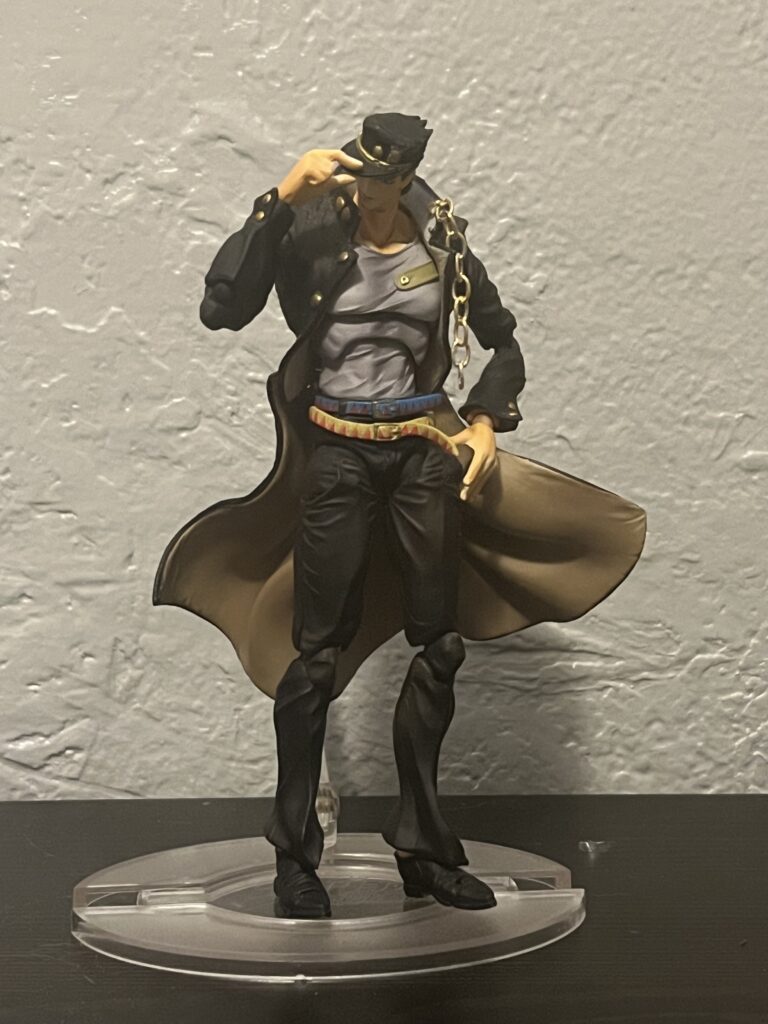
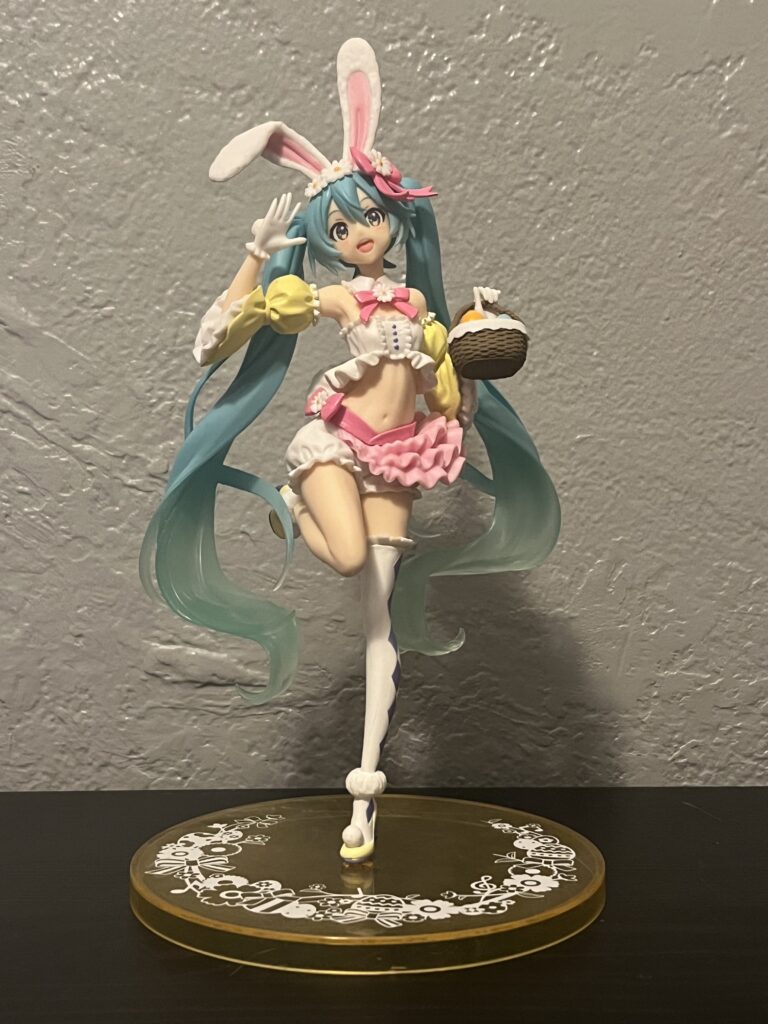
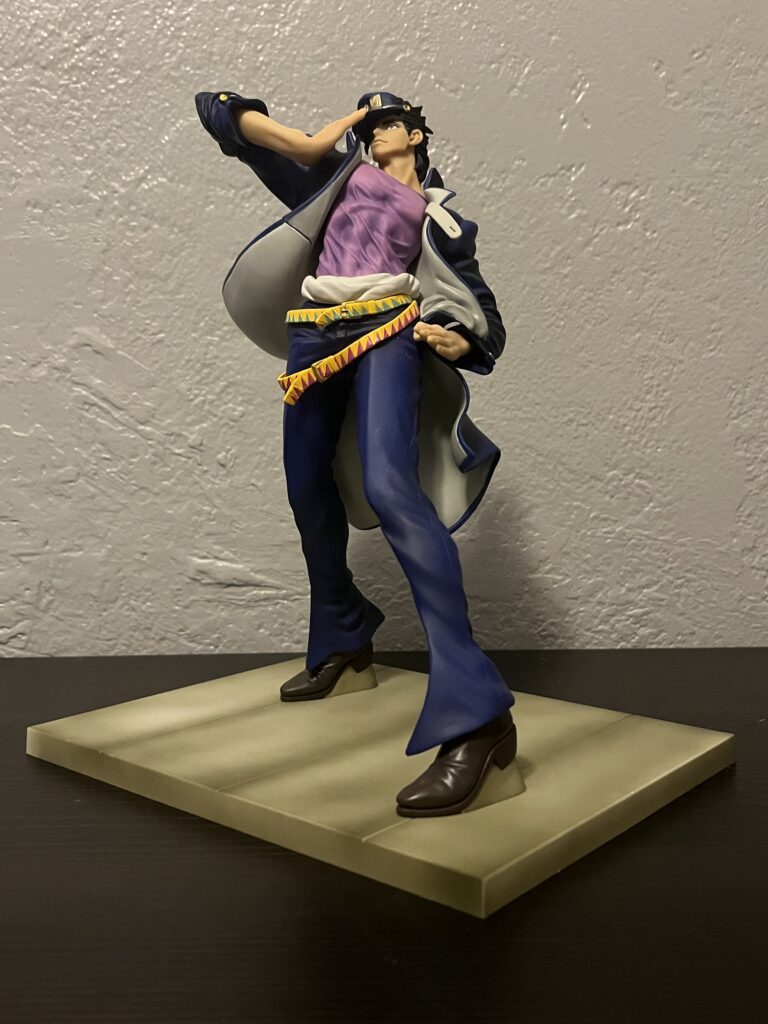

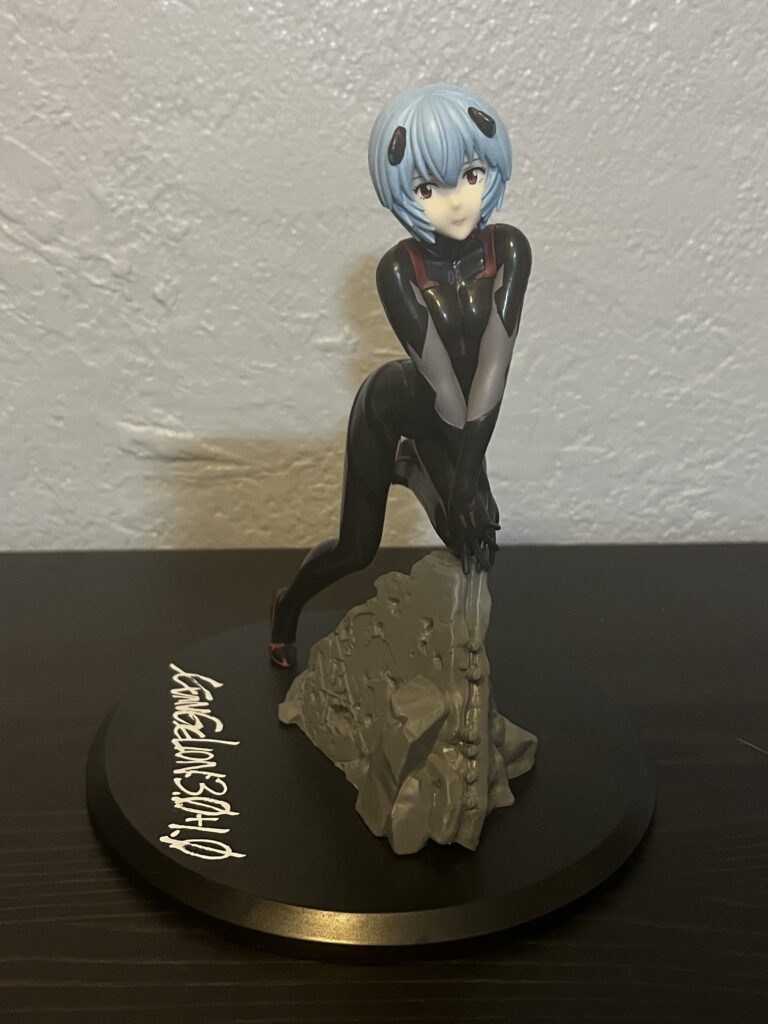
While the aforementioned figures are all related to one another rather loosely considering they are all anime figures, I have also chosen them as they are all popular anime characters (or, in Hatsune Miku’s case, one of the most popular Japanese mascots). Evangelion and Jojo’s Bizarre Adventure are some of the most well-known anime series of all time with multiple influences on both Japanese culture and media. Hatsune Miku, perhaps, would be the most recognizable from this list as she is a popular figure in both Japan and America, appearing in multiple standalone video games, serves as a mascot for the Vocaloid software voicebank, and has a large presence in the widespread Sega claw machines for her versatile prize figure distributions. Thus, despite these figures being from different series, all are anime “mascots” in their own sense due to their influences on Japanese pop culture.
Metadata Fields (and why I chose them):
I used the same eight metadata fields to describe all five of my objects. The fields I have utilized are the following:
- Class (default field) – resource type (all are classified as “physical object”)
- Title (default field) – contains series name, character name(s), any integral figure release information (ex. “2nd Ver.”)
- Description (default field) – brief summary of the figure with any important identifying information such as manufacturer, series number, or functionality.
- Creator – figure manufacturer
- Date – the date in which the figure was released
- Relation – the series/verified storefront in which the figure is from
- Rights – describes the ownership of the figure/series (i.e. production teams, individual/group creators, manufacturing rights)
- Format – physical dimensions of the object
I chose these specific metadata fields from DublinCore as they were most pertinent to my physical figure collection. Class, which I listed as “physical object,” was particularly important as it allowed for my objects to be distinct from other materials which may be virtual such as a dataset, software, or still image. Otherwise, important fields to note were description as I utilized this space to describe the figure, the series in which it was from, and a brief summary of the figure’s manufacturer or series and any notable poses/components of the figure; creator, which named the figure’s manufacturer (e.g. SEGA Goods); relation, which I provided the user with linkable information to the figure’s broader series/creator website along with an official storefront in which the product was sold online; and format, which provided the user with the physical dimensions of the figure. In all of the aforementioned metadata fields, I intended for the user to contextualize the figure and provide the user with plenty of information regarding the item for the sake of user comprehensions– especially if the user is unfamiliar with the series in which the figure is from or is looking for items from a specific manufacturer or series.
Challenges:
When documenting my items, I attempted to provide the viewer with as much context regarding the figure’s series/origin as possible while still maintaining my mission of describing the physical object as detailed as possible. This did prove to be quite challenging at times and I often had to make decisions between providing further context of a figure’s series vs. providing context regarding the physical object itself. However, I do believe I accomplished a happy medium between these two metadata philosophies as I was able to contain fields that were pertinent to the description of the physical object (addressing the series/manufacturer in the description, listing the manufacturer in the creator field, the date in which the physical object was released in stores/prize machines, and providing the object’s physical dimensions in the format field) while also providing the viewer with context as to where and what this figure is in relation to (such as the relation field where I provided a link to the series’ official website and official/partnered storefront and containing further context to the figure’s series and creators in the rights field) which is especially important for viewers that may not have any prior knowledge to these series.
If I wished to only focus on the physical characteristics/details of the item without providing any additional context to the viewer, there are a couple fields I could have added/replaced. However, DublinCore remains the most pertinent standard for my collection as Bibliographic Ontology seems more focused on document resources and Friend of a Friend does not have enough fields which describe physical objects. Thus, within DublinCore’s properties, I could have added “extent” to list the object’s release/prize window (as these are often limited releases– especially for the Hatsune Miku figures as they are released within a specific season or holiday window due to their nature of being claw prizes) or “language” and include the original box that these figures were initially housed in (though this wouldn’t apply to every entry as I do not have the original boxes for some) as a couple of these items (the Evangelion figures and the Jotaro Kujo Ichiban Kuji figure) were Japanese imports and, surprisingly enough, had a mix of both English and Japanese on the boxes themselves. Lastly, the “medium” field would apply to a majority of these figures (which is typically PVC) if known, which is often contained on the original box itself or found through the figure manufacturer’s (or partner) website. Thus, if I included the aforementioned fields to my items, the physicality of the object and details regarding the item’s manufacturing would have taken emphasis as opposed to a mix of physical and contextual (series) details. While these fields have their own respective usefulness and may be desirable to some researchers, I intended to curate my collection in a way that would be most useful to the general audience of my items– which are English language speakers and viewers that may be unfamiliar with Japanese media.
Digital Exhibits & Implications:
Digital collections and exhibits provide a vital function within the larger sphere that are museums. Particularly, these virtual exhibits provide a previously unforeseen avenue of accessibility and enhanced visitor experiences. In terms of accessibility, digital collections, exhibits, and tours provide visitors with opportunities to explore the museum’s collections and offerings without needing to be present within the physical space. This function is particularly useful for patrons who may otherwise be unable to visit the museum in-person for various reasons which include, but are not limited to: financial reasons, location, lack of transportation, or for reasons concerning their able-bodiedness (such as patrons with disabilities or older patrons who may be unable to commit to an entire in-person museum tour). Likewise, these digital offerings are particularly useful to students, scholars, and researchers who may have interest in the museum’s collection but are unable (or unwilling) to travel to the museum in-person. Additionally, by providing patrons with interactive collections (such as 3D modeling of in-house objects) patrons are able to curate their museum experiences as they see fit— which is also attractive to those studying the objects. This much is apparent through the metadata contained within a digital object found in a museum’s digital exhibit, where the “online presence of digitized materials, particularly when accompanied by robust metadata, assists with discoverability.” (Peterson 12) As such, if the metadata is detailed and easily found within the museum’s digital exhibit for the researcher, varied interpretations of the item may follow suit. The accessibility of these digital exhibits is crucial for various museum patrons and needs.
It is important to note, however, that the implementation of these digital exhibits should not be an excuse for making physical museum spaces otherwise inaccessible to those with disabilities. Rather, museums should be providing patrons with an option of viewing the museum’s collection virtually. Additionally, these digital exhibits, due to the expansive options of customizability and being beyond the confines of physical space, have the capability to add to the museum’s overall experience by providing additional visitor experiences in conjunction with the physical space such as audio tours or interactive AR elements. While these digital exhibits may be utilized as a replica of the original museum grounds and collection (just converted within a virtual sphere), digital exhibits may also extend the museum’s offerings by providing patrons with experiences and resources that may otherwise be unobtainable within the museum’s physical spaces (whether that be due to limited space, budget, or other resources).
Due to the aforementioned customizability of digital spaces, there are multiple avenues for collaboration among GLAM institutions. Of course, budget constraints are one of the most prevalent problems among these spaces, but open-sourced and collaborative digital spaces have the ability to solve such constraints. For example, digital archival websites such as Pinellas Memory and Florida Memory both provide users with digital resources such as photographs, audio files, and documents. The former, Pinellas Memory, is a collaboration among a variety of Pinellas County public libraries, where those participating upload their collections within a central database (which the user can then filter between libraries or simply access the entirety of the digital collection containing all resources uploaded) which utilizes Islandora software. Relating specifically to museums, however, it is understandable that digital exhibits may be specifically curated (or relevant) for each museum. While incorporating these exhibits or tours within a collaborative space may seem difficult, utilizing a centralized website or app may help provide viewers with new experiences and encourage them to visit or view collections which they may never have considered prior. For instance, a city or county with a variety of different cultural institutions or museums may find use in providing viewers with digital exhibits and collections within a dedicated app which has the ability to give viewers tours of the various premises and showcase digital collections. This could then encourage the user to visit these spaces in-person after viewing their virtual offerings through this centralized, city-wide (or county-wide) app. These digital exhibits and technologies have the ability to provide users with previously unforeseen conveniences and accessibility while also providing new means of collaboration among GLAM facilities.
Citations:
Peterson, Hailey. “Accessibility and Aldus@ SFU: Exploring multiple avenues of access for digital exhibits and academic research.” (2021).
Websites utilized:

Leave a Reply
You must be logged in to post a comment.