My digital collection consists of five items of decor in my home. Untitled Collage is an analog collage I made this year from old art books and magazines. Wood Burning of Miranda by John William Waterhouse is a gift from my partner that was bought from a vendor at a Renaissance Faire. Not an Ostrich is a print of a photograph made available by the Library of Congress as a part of their free image collection by the same name. Green Dragon is a figurine I purchased at Epcot, and The Parisian Novels (The Yellow Books) is a framed Vincent Van Gogh print.
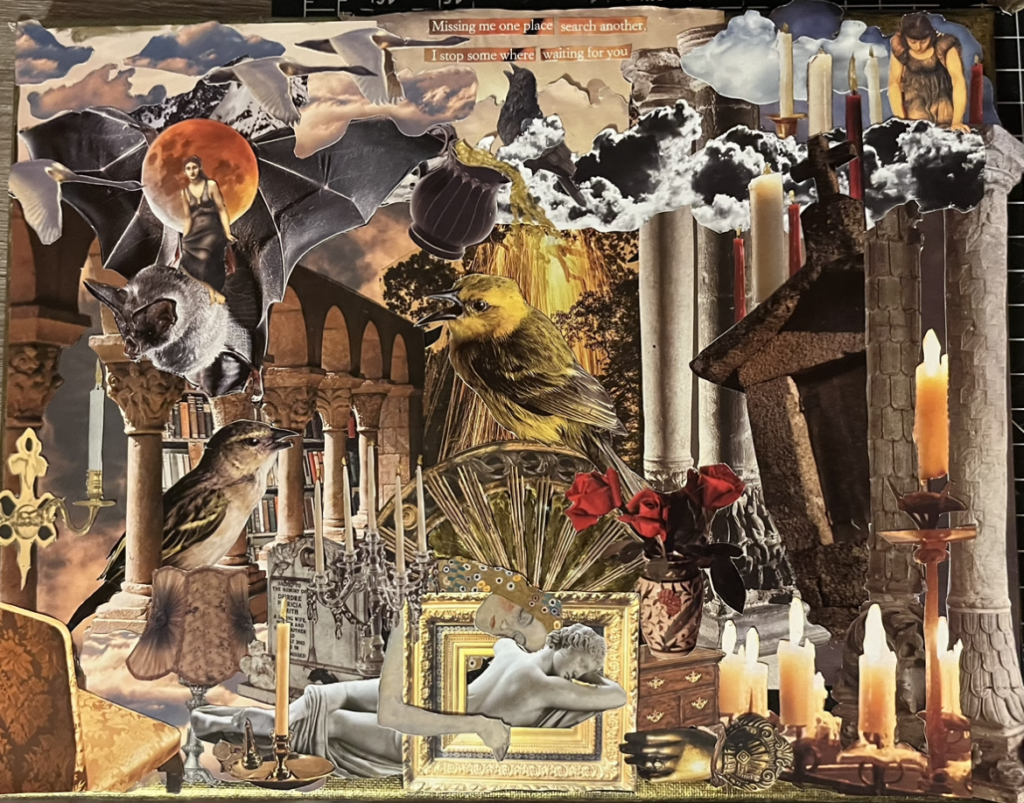
Untitled Collage
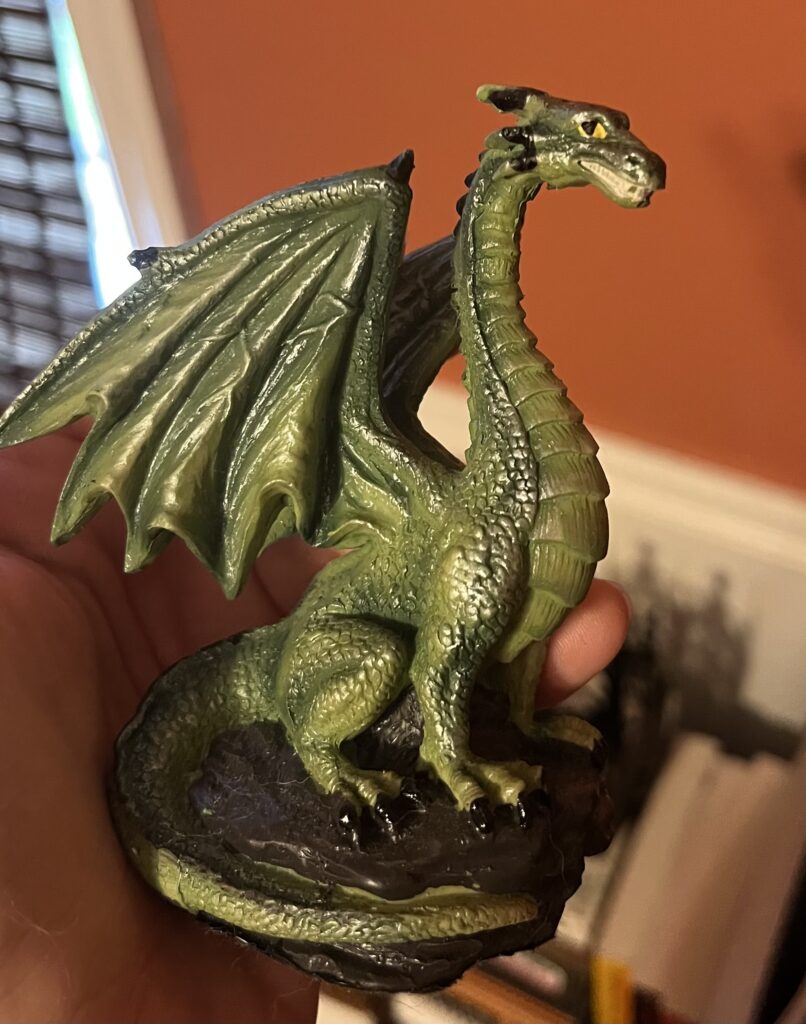
Green Dragon
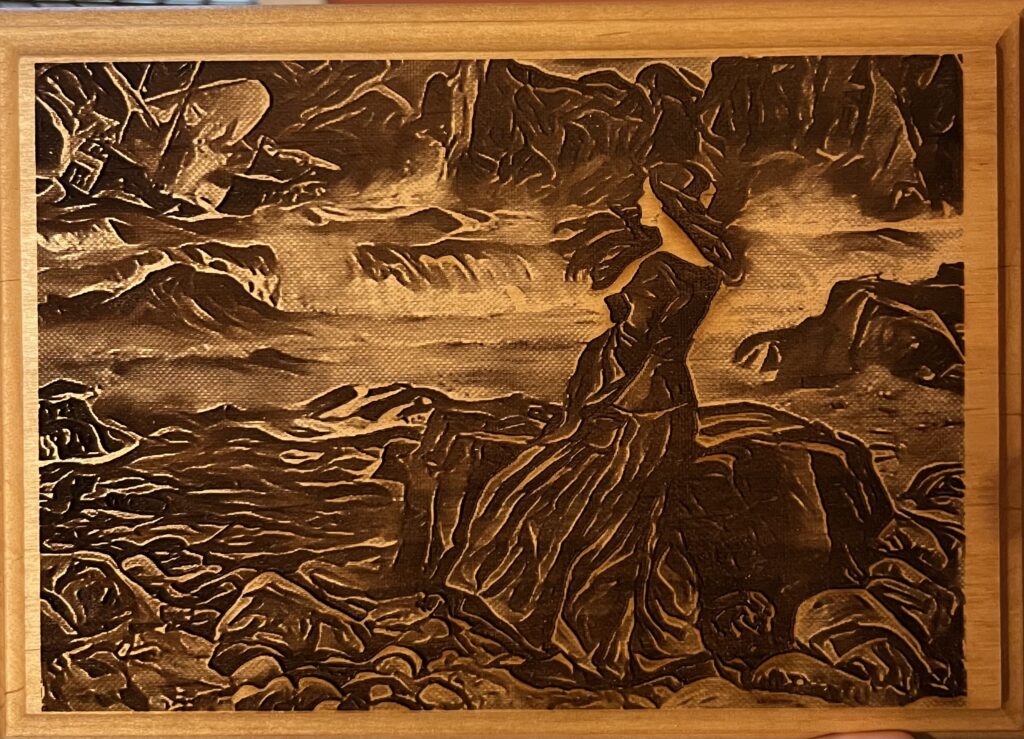
Wood Burning of Miranda by John William Waterhouse
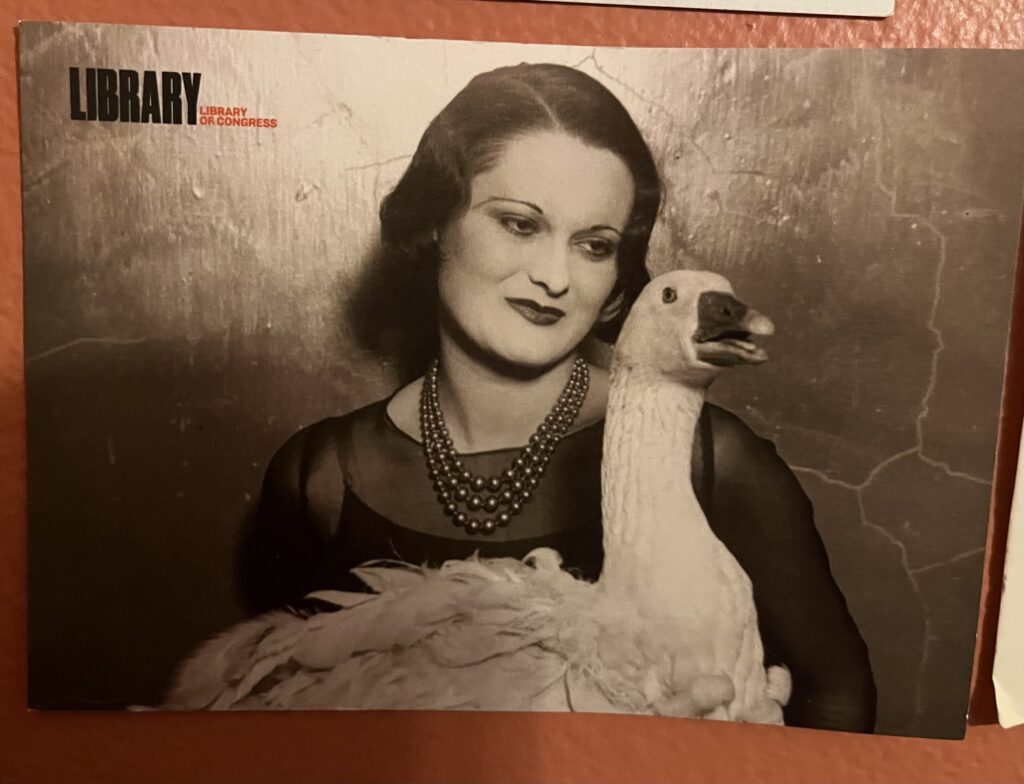
Not an Ostrich
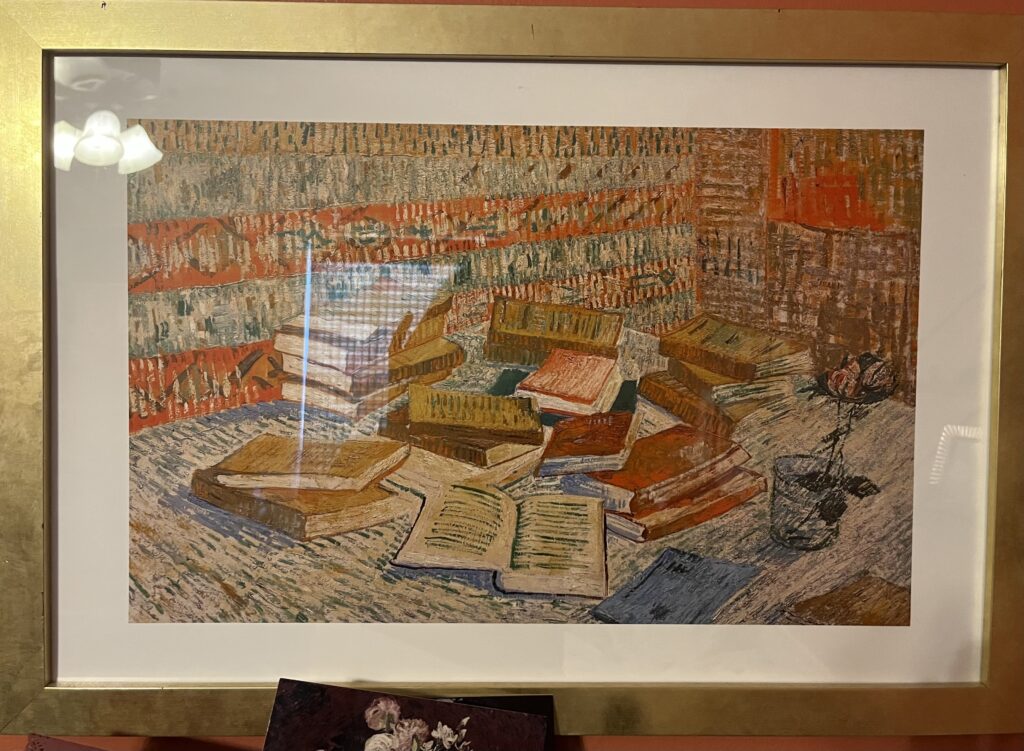
The Parisian Novels (The Yellow Books)
I chose Dublin Core metadata standards for my descriptions, as I have worked with it in the past and find it to be useful for works of art and physical items. Three of my items are “image” types and two are “physical object” types. I used title and description for all five items. I used the “creator” field for all but Not an Ostrich, because the photographer is not known. Instead, I used “publisher” for this one and wrote The Library of Congress, as it can be accessed through their digital collection. I used “date” for all but the dragon figurine and the wood burning, for I could not locate dates for these items. For all of the items, I used “format.” This is where I noted their physical dimensions. All of these metadata fields were chosen with the purpose of describing the items in mind. These fields tell people how and where the item can be found. “Format” also gives people an idea of the realistic size of the item, as this is difficult to tell through just an image.
One challenge I faced was the difference between “format” and “medium,” as it seems like the two can be interchangeable at times. I decided to use both for my physical objects: “Format” describes their dimensions and “medium” describes the material used to make them. I also had trouble deciding how to catalog the wood burning reproduction of Miranda, as I could not find an official title for it. I decided that since it is a reproduction of an existing work of art by John William Waterhouse, I would title it “Wood Burning of Miranda by John William Waterhouse.” In “creator,” I decided to credit both the wood burning artist and John William Waterhouse. If I decided to make this digital collection focused on the personal aspects of these items rather than their physical descriptions, I could have chosen different fields. For example, the “subject” field could describe the themes and meanings of art pieces and “audience” might add insight into their purposes.
Digital exhibitions for museums is a wonderful leap towards accessibility. Many people who can’t leave their homes to walk around a museum can view its items virtually. I myself participated in virtual museum exhibition tours during quarantine for COVID-19 in 2020. At the same time, a lack of awareness of virtual exhibits’ existences is an issue. Additionally, many of the same people who can’t physically travel to museums are also the same people who might not be technologically proficient, specifically elderly people. Libraries can partner with museums to promote the existence of virtual exhibitions, and it’s something that can be explored during library digital literacy programs.

Leave a Reply
You must be logged in to post a comment.