Building the Collection
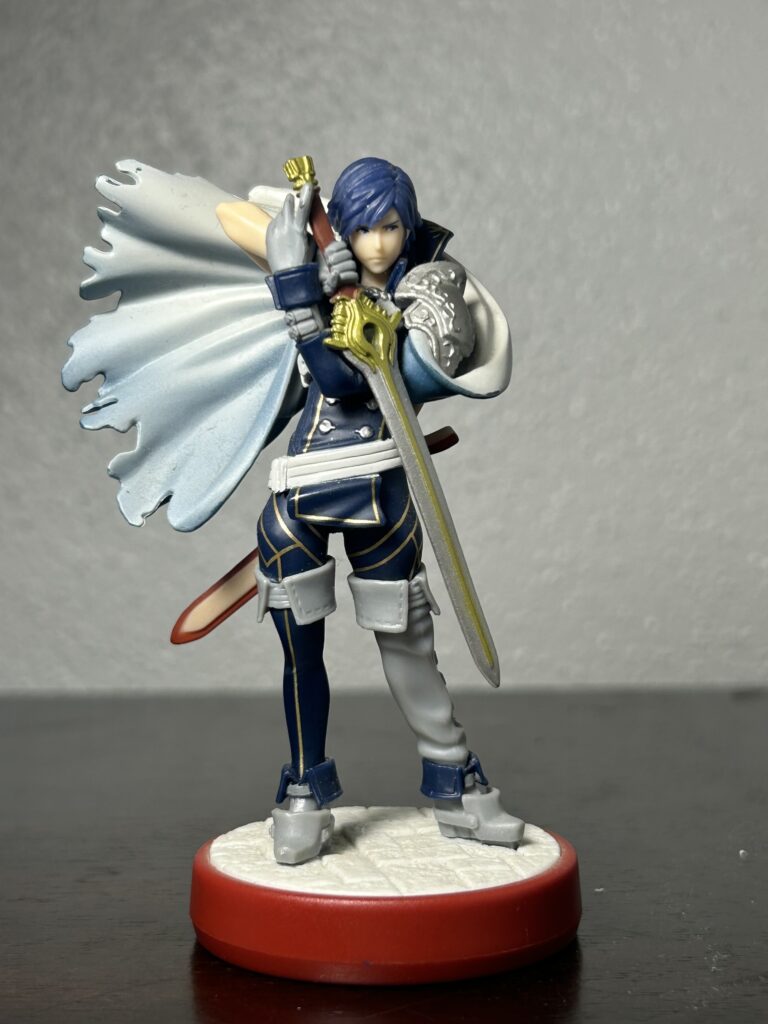
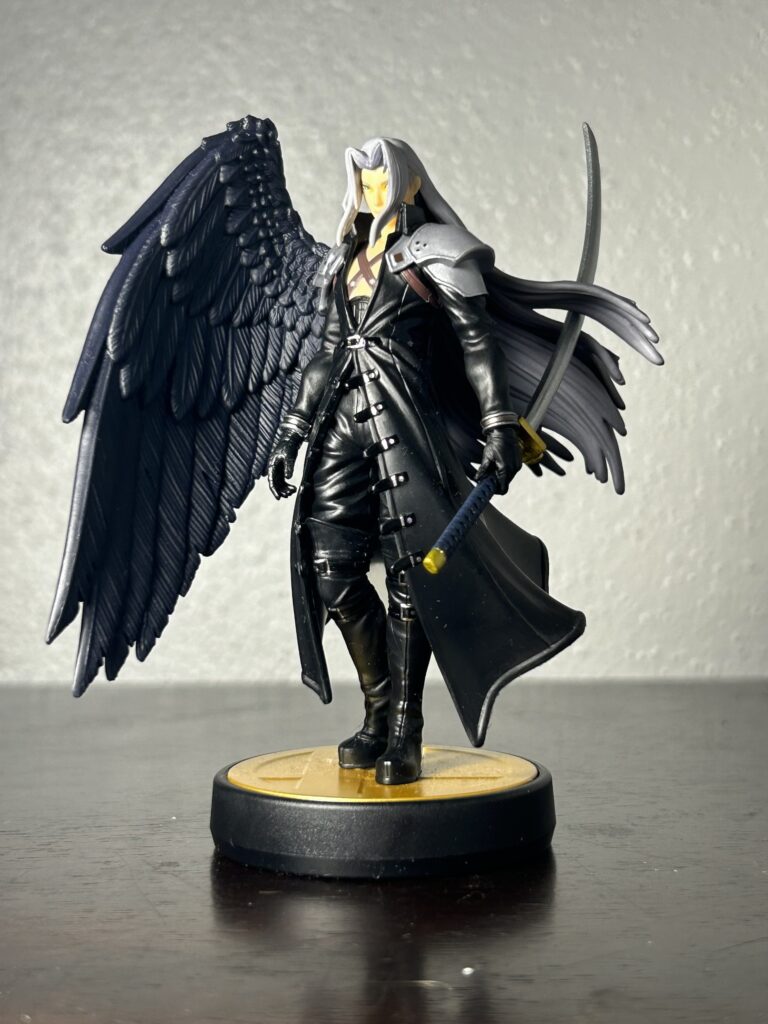
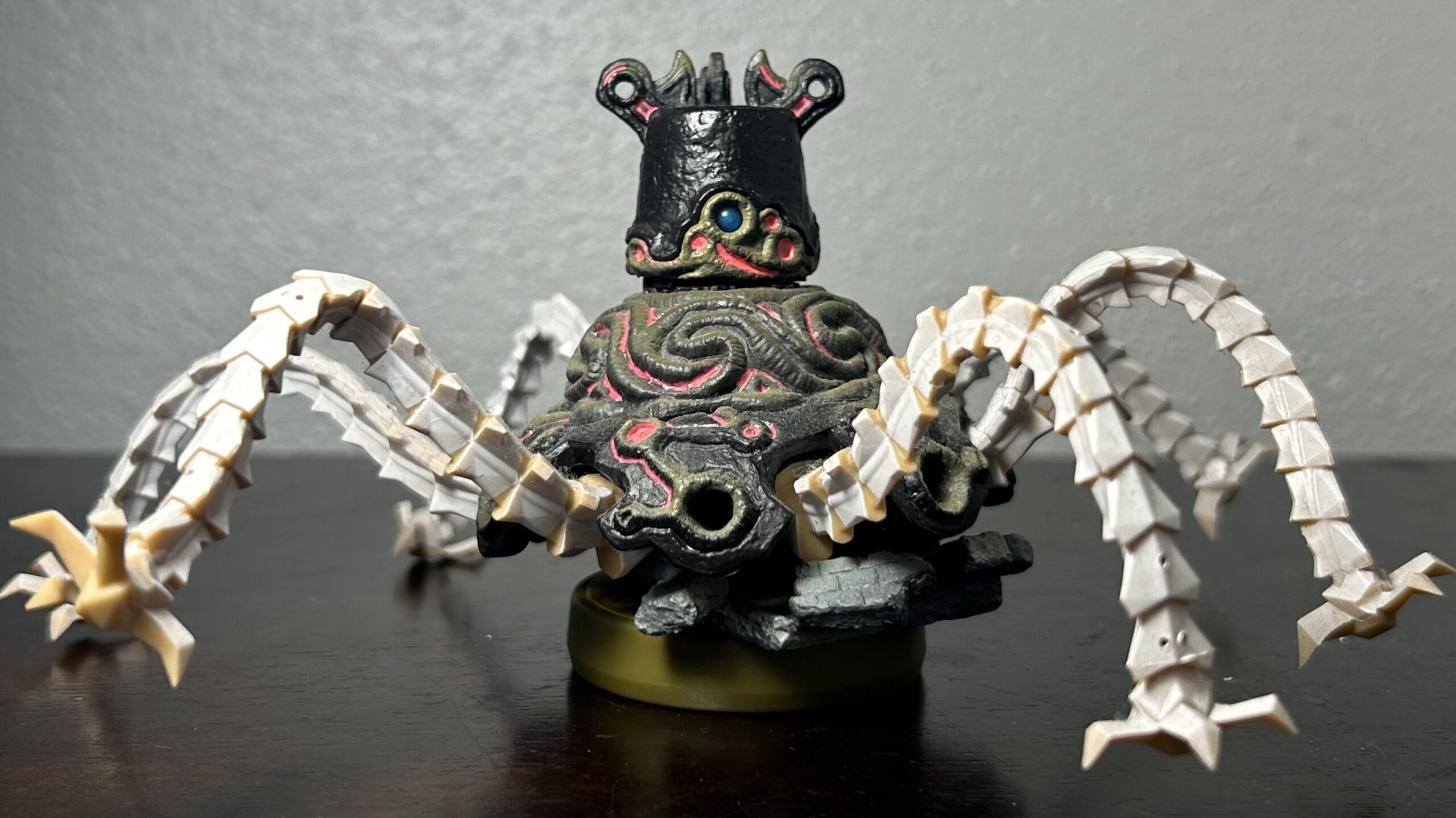
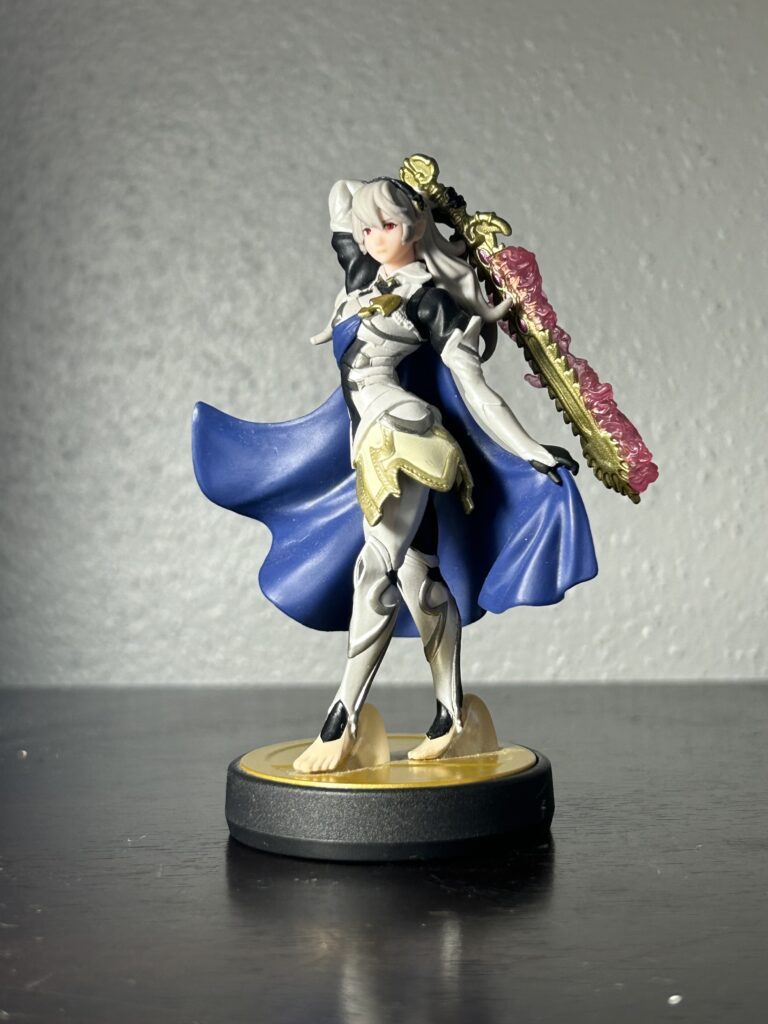
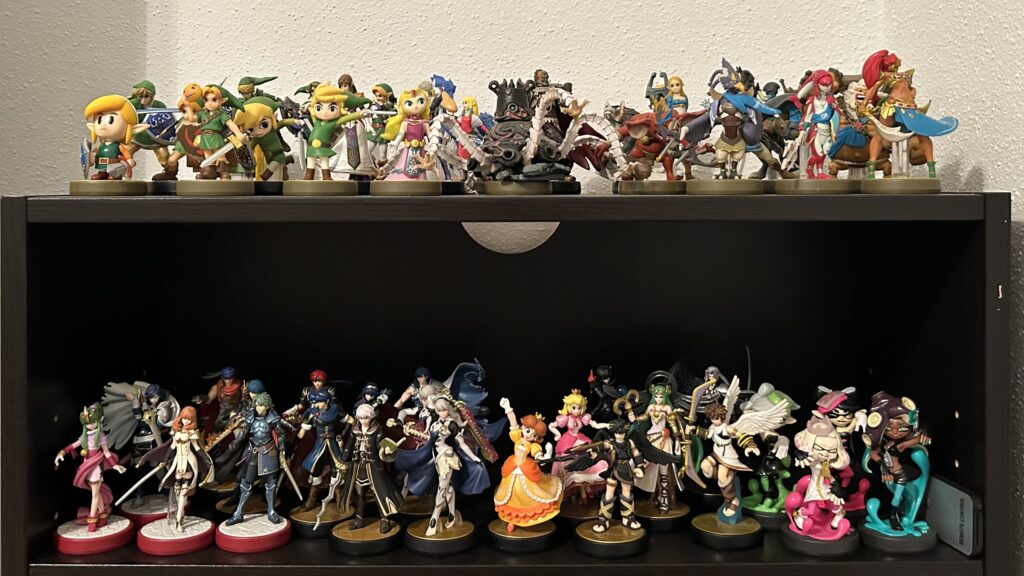
My exhibit includes a selection of amiibo–Nintendo’s line of toys-to-life figurines–from my personal collection. I chose to focus on these figurines because they resist being easily classified as a single type of object; they are both physical (decorative) objects and interactive resources by virtue of their ability to communicate with certain software. I have more than fifty amiibo as a result of several years of collecting, so it was tough to narrow down to just five. Each figurine shown below stands out from the rest in one way or another:
- Chrom (top left) was the first addition to my collection almost six years ago.
- Sephiroth (top right) is my most recent acquisition. He is also an example of an amiibo featuring a character Nintendo does not own the rights to, which makes determining copyright slightly more interesting.
- The Guardian (middle) is my largest and most visually distinct figurine–its posable legs make it the only amiibo with movable parts.
- Corrin (bottom left) was the most expensive amiibo to obtain; I paid about $100 for her figurine a couple years ago, but I’ve seen them sold for twice as much.
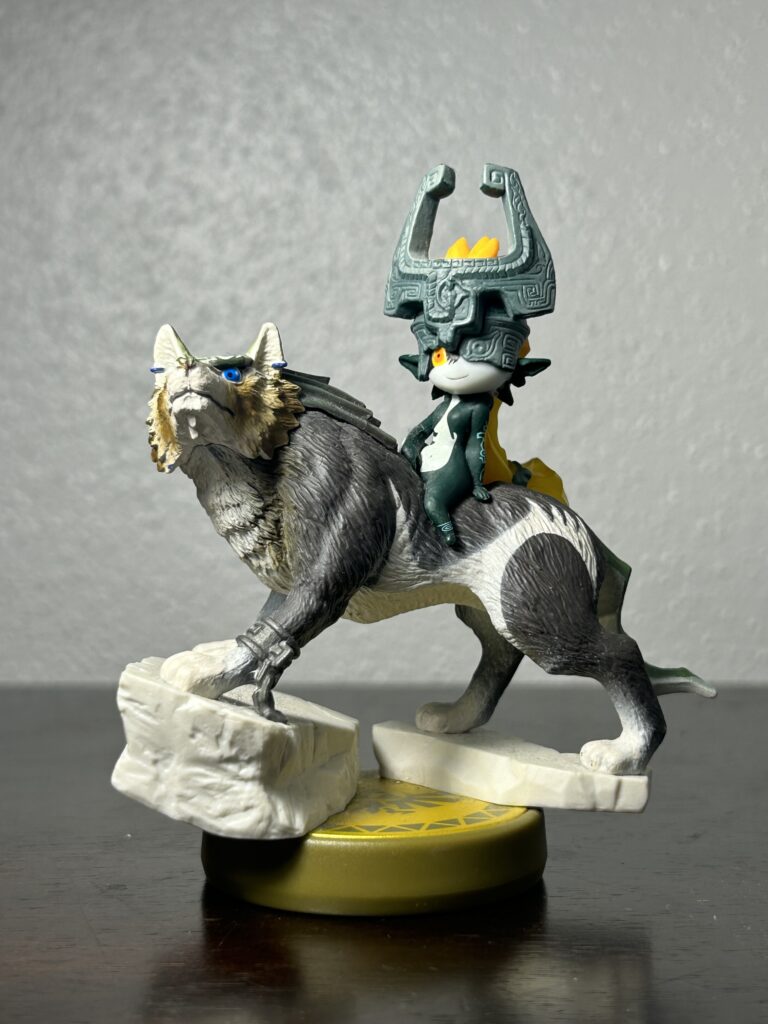
- Wolf Link (bottom right) is my favorite; I’m a huge fan of the game he comes from, and I like that the necessary structural supports are integrated into the figurine’s design.
Adding Metadata
Below are the metadata fields I filled out for each of the five amiibo along with a brief explanation of how/why I did so.
- Title – The figurine’s name as it appears on the Nintendo website. As both Chrom and Corrin have multiple amiibo, it was necessary to note that distinction here.
- Type – Each figurine was classified as both a Physical Object and Interactive Resource per Dublin Core standards. While amiibo are mostly decorative, each has a near-field communication (NFC) chip in its base that allows it to interact with a number of Nintendo software titles in both read-only and read-and-write capacity. Because that interactivity is not immediately apparent, I made sure to include it in the metadata.
- Date – The initial release date for each figurine.
- Description – I included two paragraphs here. The first is a physical description of each figurine including attributes like hair color, clothing, weapons, and base design. The second paragraph is taken from Nintendo’s website and focuses more on the story surrounding the character(s) depicted. I felt having both descriptions was necessary as the former provides helpful information (particularly if the user cannot see the item) while the latter places the figurine within its context as a marketed product.
- Format – The physical dimensions of each figurine in inches. I also included separate measurements for the circular base. Not only was this a objective means of describing each figurine, it also provides a sense of scale, which can be hard to determine through a picture alone.
- Publisher – All amiibo are published by Nintendo Co., Ltd. regardless of copyright status.
- Identifier – Each figurine has an associated item model number, which can be found either on online product listings or certificates related to the Consumer Product Safety Improvement Act (CPSIA). Even if it can be difficult to track down, I find it helpful to include an unambiguous reference for each figurine.
- Relation – A link to each figurine’s page on the Nintendo website.
- Rights Holder – Copyright information pulled directly from Nintendo’s website. There is a distinction between between characters developed fully in-house, characters developed by Nintendo’s subsidiaries, and characters developed by third parties and licensed to Nintendo.
I had also planned on including information relevant to the provenance of each figurine, but I realized I could not confidently determine the date and retailer associated with the amiibo. Additionally, for any figurines I bought on the secondhand market, I had no way of knowing when it was originally purchased. I do feel like the finished collection feels somewhat impersonal as a result, but I would prefer that all of the metadata be accurate.
Thinking Broadly
The biggest benefit of the proliferation of digital exhibits is that they greatly increase access to information among the public. Being able to view collections on a website rather than having to physically attend an exhibition is a much lower barrier of entry–in many cases this also comes with a reduction or elimination of cost. Within the context of my amiibo, it means that people do not have to spend tens or hundreds of dollars on figurines whose demand far outstripped their supply. Digital exhibits also allow for a more hands-on experience with collections. For instance, what if my collection featured 3D models of the amiibo rather than just pictures? Users would be able to freely view each figurine rather than having to settle for static views, which can also be true of physical displays.
Digital exhibits still face their own set of challenges in terms of their effective implementation. Just as a physical exhibition must take into consideration those who might have trouble with access (disabilities, financial issues, etc.), their digital counterparts must also address potential issues surrounding availability. 3D models sound great in a vacuum, but if people lack adequate hardware or software to view them, they are not serving much of a purpose.

Leave a Reply
You must be logged in to post a comment.