The digital system that I chose to experiment with is SNORQL (SPARQL), which is a technology used to explore linked data by running queries within Wikipedia. This was an interesting exercise – SPARQL is a neat research tool that allows you to see all (or most) of the things connected to a specific person, place, topic, etc., or do very narrow research by defining many different parameters. Here are a few snapshots of my queries (apologies for the small type- you may have to zoom in..) :
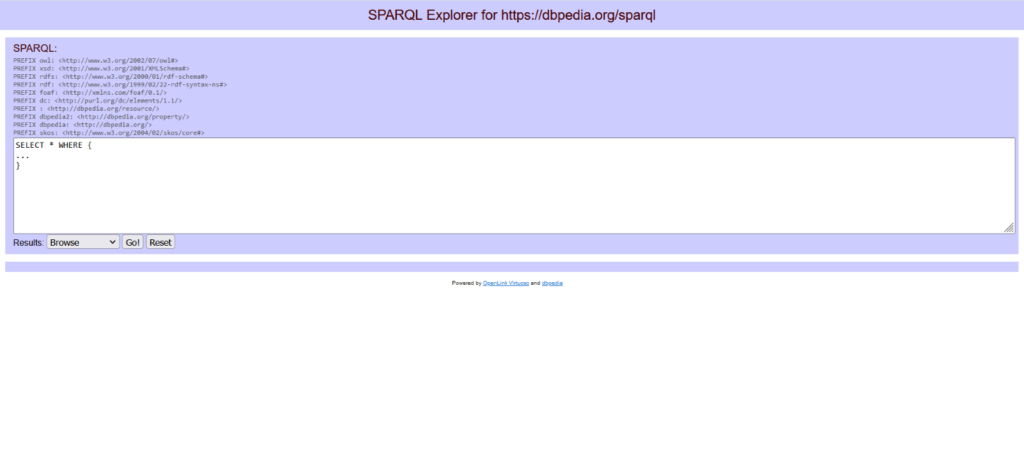
This first screenshot is the dbpedia SNORQL Query Explorer home page: https://dbpedia.org/snorql/
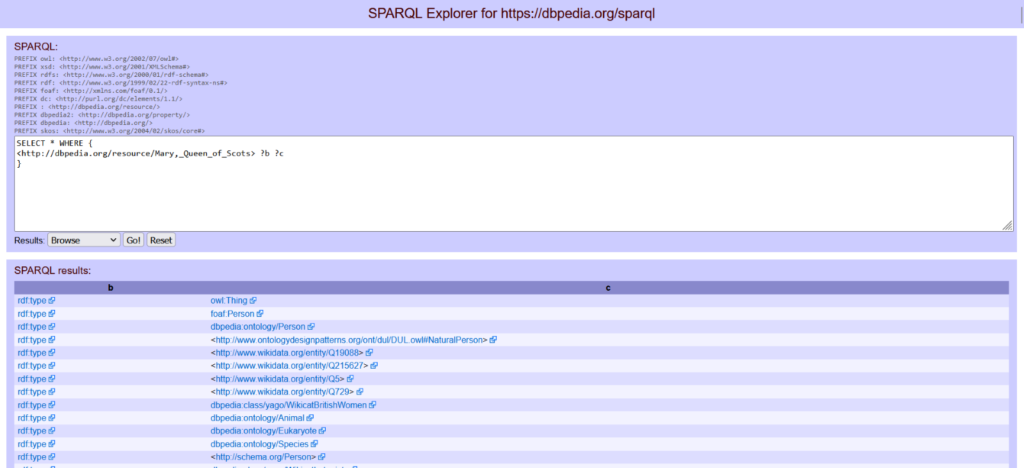
This second screenshot is where I pulled a resource from Wiki and used it to search more about Mary, Queen of Scots. This search pulled up many results, and I used categories related to this search to dig deeper.
This screenshot shows the results that came up when I conducted a secondary search for the category: People_of_Stirling_Castle.
And lastly, this screenshot shows results from another secondary search for Category:Scottish_people_of_French_Descent.
Working with this digital system was very challenging for me. The system is extremely particular about format & characters used, so I got error messages or no results almost every time I tried to experiment with it, which was pretty frustrating. I wasn’t sure (honestly, I still am not sure; need to do more research) what I was doing wrong or what the rules are for the queries to work. In order to get successful queries, I had to follow the examples from class almost exactly.
The DBPedia SPARQL page does have examples of different queries that get very specific, but the formats are all very different from each other & different from the queries I ran (which were based on the examples provided in class). The help page has a lot of tech & coding jargon that I wasn’t familiar with, and not having a tech background, I found myself feeling more and more lost. It was a little overwhelming not understanding the language and reasoning behind the format of the queries and just jumping into it. I felt like I was missing a huge chunk of knowledge that would help it make sense. Considering the struggles I had attempting very simple searches, I think it’s important to have a solid tech-knowledge base to work with to understand this system better, or to have several training sessions before trying to experiment with it. I find the idea of linked data and conducting these types of searches fascinating, so I plan to do more research on how to improve my use of it!
Some of the benefits of wider adoption of this system across museums is more flexibility in the way that data is connected within an organization or across different institutions. Linked data can allow for more in-depth and very specific searching by patrons doing research. Adopting SPARQL could also benefit LAM professionals & institutions by providing an avenue to create more unique collections of works that share common history, features, locations, or any other kind of attribute. Using technologies like SPARQL could also connect data in meaningful ways to create displays and visuals to better engage patrons.
Looking forward, an obvious challenge of implementing this system more broadly is that for it to be widely adopted, there has to be some way to make it more user-friendly. If members of the public are trying to attempt queries, and after four or five tries, they still get errors or no results, many people are likely to give up and move on to something else. Providing simple instructions or a format that is easy to understand could encourage more people to explore the data available to them and dig deeper into it. Another challenge that could occur is translating between different languages at institutions in different countries. Works may have slightly different names in different languages that do not translate well literally. In addition to this, sustainability and the cost of upkeep as technologies change over time is always a challenge.

Leave a Reply
You must be logged in to post a comment.