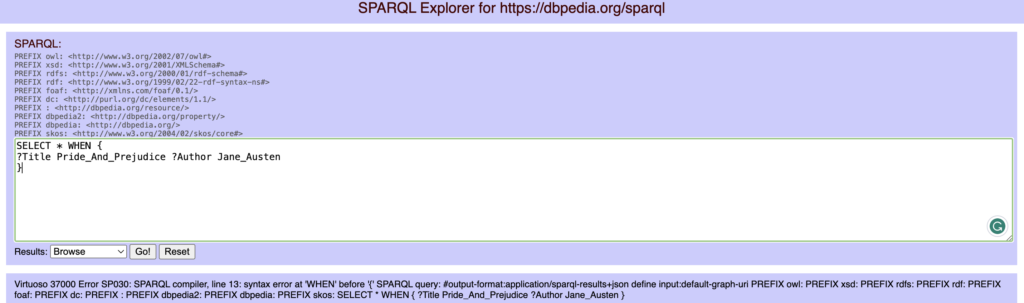
For this assignment, I attempted to learn more about SPARQL by playing around in SNRQL, with the goal of better understanding other forms of linked data. SPARQL is a query system that allows people to search either random or preexisting terms in RDF: Resource Description Framework. This framework allows people to link a specific term via URI so that those reading our data can click on the term we’ve selected and see the exact information we mean by using the selected term.
The ability to link specific terms through URI allows us to make sure that we are clear when describing materials for patrons but allows us to link to more information as more URIs are connected. This is the process of using linked data. For this project, I attempted to look up a query to find the publication date of Jane Austen’s Pride and Prejudice. Using the structured query into SNRQL, shown below, I tried to use “when” as the predicate for the query but continued to receive an error message, regardless of how I rewrote my query.
I am certain this was user error.
SELECT * WHEN {
?Title Pride_And_Prejudice ?Author Jane_Austen
}
The downside of a more open-ended query system is that there are a limitless number of errors the user can make in the process of writing their query. SNRQL is designed to be able to search endless amounts of three-part queries, but if you do not know how to properly write the query you want to run, it will end in an error message like the one shown above. The ability to search any form of query allows people to search many types of linked data within the data we have before us.
That being said, the more cases of people using this language to link their data with other forms of data out there, the more common linked data becomes, and the more people are able to successfully link their data with information that others have collected before them. This allows for an endless supply of data that can be linked as long as it has been set up properly. Special collections libraries and archives across the US are using linked data within their catalogs more and more each year. Museums have the ability to utilize linked data within their cataloging and registrar systems.
The benefits of linking data for works of art and history provide an opportunity for future research and continued education to visitors after their visit. Using a linked data system lets the registrars assist admirers of art in finding other works by the same artist, or from a similar art movement. It lets visitors find out more about the history of a time period or a movement. The implications of linked data allow researchers and art lovers the ability to find other institutions that have works from the same artists. This also helps museums find other institutions that have works they may be able to work with down the road in new exhibitions or curatorial projects.
Moving to a linked data system would require institutions to hire registrars who can be fully dedicated to the remediation of the current catalog. The new acquisitions are added to the collection catalog with the new workflow including linking the URIs to the appropriate terms. This would by no means be an easy or fast endeavor but the implications of being able to link collections across institutions for visitors and researchers would make a significant impact to all who interact with museum collections.

Leave a Reply
You must be logged in to post a comment.