Contributor: D. Corchado
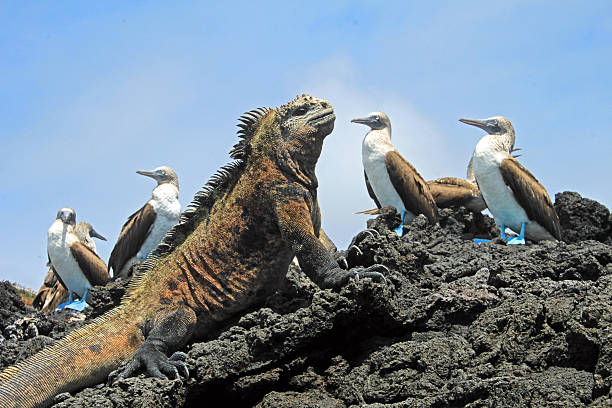
In 2011, The University of North Carolina at Chapel Hill and the Universidad San Francisco de Quito in Ecuador created the Galapagos Science Center (GSC) in an effort to advance science and conservation in the Galapagos Islands. Their initiative aims to save the Galapagos Islands by extending a richer and more complete understanding of their ecosystems and the threats that may affect their sustainability.
Through the partnerships of GSC and many other cultural heritage institutions and organizations, creating the project Iguanas from Above became a reality.
Partners
Many organizations help make Iguanas from Above a reality:
- The University of Leipzig, Germany
- The International Iguana Foundation (IIF)
- The Galapagos Conservation Trust (GCT)
- Swiss Association of Friends of the Galapagos Islands
- The Galapagos Science Centre (GSC)
- Universidad San Francisco de Quito, Ecuador (USFQ)
Cultural Heritage Institution: Iguanas from Above
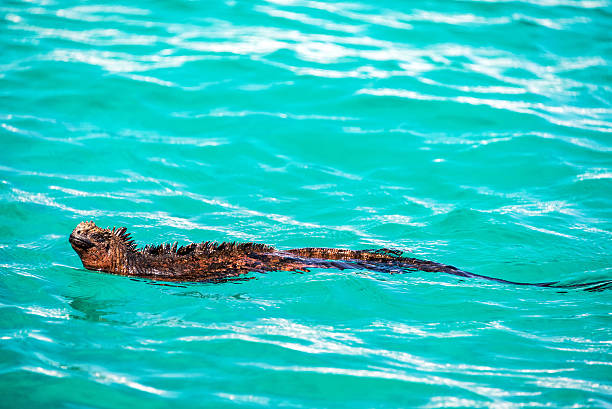
Iguanas from Above is a research team that uses drones to take aerial photographs of the coastline of the Galapagos Islands. Their research aligns with the conservation efforts to study the populations and count the Galapagos Marine Iguanas from aerial shots to save them from extinction. They only live naturally on these islands. These marine iguanas are threatened by pollution, climate change, people, and invasive species. Iguanas from Above aim is to secure their future existence and not the extinction of the Galapagos marine iguanas.

Many images are collected through their work, and their small team cannot count all the iguanas in every image. It is cost-effective to ask the public to become science citizens to help their research through Zooniverse. Anyone who joins to help with their project will contribute valuable information that will help preserve the marine iguana populations. Through the engagement in Zooniverse, participants can give reliable estimates of the iguana population count and other relevant information. These counts and results will be shared with other scientists and conservations to protect species if their populations are endangered.
Many images are collected through their work, and their small team cannot count all the iguanas in every image. It is cost-effective to ask the public to become science citizens to help their research through Zooniverse. Anyone who joins to help with their project will contribute valuable information that will help preserve the marine iguana populations. Through the engagement in Zooniverse, participants can give reliable estimates of the iguana population count and other relevant information. These counts and results will be shared with other scientists and conservations to protect species if their populations are endangered.
Strategies to garner engagement
Throughout the process, any participants through Zooniverse can comment on a photo they are counting and identify the iguana populations through an option called Done & Talk. By doing so, citizen scientists can connect their comments with the research team and engage with them concerning their observations.
Also, there is a Tag option for participants to connect with researchers and others in the Zooniverse community.
A section called Iguanas from Above Talk allows the Zooniverse participants to collaborate with the project and discuss research topics with the expert team and the Zooniverse community. Research topics range from female iguana swimmers, garage, and pink iguanas to interviewing citizen scientists.
Share photos and insights from this work, and regularly update about their project through their social media feeds at X & Facebook: (at)iguanabove and through Instagram: (at) iguanasfromabove.
Mitigating Risk & User’s Functionality
By using drones to research the marine iguana populations, Iguanas from Above collect high-quality images from iguanas faster, more efficiently, and safer without disrupting the behaviors observed from the ecosystems. They fly drones from nearby boats to protect the Galapagos Islands’ wildlife while ensuring their research crew’s and the wildlife’s safety. Also, this allows them to avoid bringing invasive species to the islands.
Currently, they are researching in their third phase from images that were collected in December 2021. In phase three, they view images from Genovesa, Pinta, and Marchena, the northern islands, where the marine iguanas are darker than in previous phases.
From previous stages, they have improved the image quality and the number of marine iguana counts in the images in response to the results and feedback from the volunteers. They also have validity measures that determine the accuracy of their citizen-scientist volunteers that measure the precision of their iguana count.

Previously, many of the images that volunteers viewed contained too many iguanas, which unfortunately led to inaccuracies in the population numbers. To avoid overwhelming their citizen scientists, the images have reduced amounts of iguanas, options to change the contrast of the photos, and even allow zoom in and out functionalities.
They rely a lot of their energy on long-term and seasoned volunteers with the most expertise and experience in producing more accurate results. However, the expert-level counts differ from the citizen scientists, and they are working through the data to find a method that filters and improves the volunteer experience, which may improve their accuracy.

There are tutorials on counting in a zig-zag approach across the images to ensure that every area of the image is scanned and not missed. This method allows for the different iguana types and other classifiable elements to be classified through a dropdown menu option next to the image. An option allows users to reference and remind them how to identify the other kinds of populations and special cases, like identifying plastic and fishing materials throughout their counting process.
If, while scanning, a participant locates an iguana, the user has to move their mouse over the head of the iguana and right-click to leave a marking that identifies the iguana. From the drop-down menu, participants can select if the iguana is a male, a lek, or female and potentially identify it as one of the special Christmas-colored types.

New volunteers must register through the Iguanas from Above project page in Zooniverse and maintain their login credentials to access the collected images and participate.

My recent classifications

A tab through Iguanas from Above called “Your recent classifications” allows users to access the images they identified in the grand collection. The research team can access it after participants submit their classifications by clicking the Done button.
Throughout the phases, experts count the iguanas alongside the citizen scientists. Once Iguanas from Above receive the results from the citizen science, they evaluate and compare the similarities of the counts from the volunteers. In general, the research team expects similar results from other projects, and they will continue asking volunteers to count as they cover the entire Galapagos Islands. When Iguanas from Above receive their results, they will direct them to the International Union for Conservation of Nature (IUCN), which will reevaluate the conservation statuses. These evaluations will impact the future of the marine iguanas and other species inhabiting their ecosystems. Ultimately, the counts from the citizen scientists will greatly impact any conservation efforts for the species on the Galapagos Islands.
My engagement with Crowdsourcing
As a citizen scientist, I felt a great responsibility to accurately identify marine life from the provided images, with much-added pressure to do the right thing. It was a safe, engaging, non-invasive way to classify the various species without strenuous training, and I relied on a helpful Field Guide for easy classification. I thought this research project for the conservation and sustainability of the Galapagos Islands is successfully sustainable and provided me with greater environmental awareness of these species and their ecosystems.
Iguanas from Above benefited from volunteers by addressing the issues of environmental change, conservation needs, and the greater purpose of protecting biodiversity. I thought their outreach efforts were effective through Zooniverse, where I connected with their aims and values, especially through the impactful images and descriptions provided to help provide us, citizen scientists, context.
From my limited time as a citizen scientist, Iguanas from Above created a reliable scientific network that seriously approached user engagement and discourse. They achieved this through their multiple levels of data infrastructure that provided perspectives from experts, global institutions, and interested volunteer scholars across their Forum and Talk pages.

In general, crowdsourcing projects like Iguanas from Above provide valuable outlets for investments and interest. For example, this project provides opportunities for the volunteers to immerse themselves in becoming stewards of cultural information, such as adding to the conservation efforts. These crowdsourcing projects can help passionate participants in new discoveries and perspectives and add to the cultural and scientific awareness of biodiversity and the need to protect it. Overall, it depends on scientific knowledge about biodiversity while allowing participants to be safe and providing iguanas counts from their homes’ comforts.
This is especially important due to the economic impact of COVID-19 on travel and tourism, and this may have deepened the overall funding efforts for experts to study the biodiversity of the Galapagos islands.
Other implications
Many cultural heritage institutions in the past and sadly today, have historically excluded populations, and these institutions determine what has been preserved and who and what gets representation in collections. A digital crowdsourcing project like Iguanas from Above can offer spaces for engagement from diverse voices globally, providing fresher perspectives and positive community engagement.
Many citizen scientist users are passionate and enthusiastic to contribute their efforts and energy to collections that can help lead to new discoveries and increase overall access to materials. Many of these cultural and scientific materials are inaccessible, and through crowdsourcing projects, much of this data can be digitalized into collections that preserve information and cultural knowledge worldwide. By participating in crowdsourcing, cultural and scientific heritage institutions can create more spaces for dialogue and discussion while creating deep and lasting relationships with broader communities.
Maintaining the overall accuracy and reliability of the information contributed by volunteers can be challenging. Many crowdsourcing projects include errors and misinformation due to poor training measures or misunderstandings among the volunteers. For some cultural heritage institutions, the volunteers’ contributions can make it challenging to organize the data while facing potential technological barriers from potential contributors. Although many crowdsourcing projects are accessible, they may not be tech-friendly and do exclude potential volunteers.

Iguanas from Above and other crowdsourcing projects foster a sense of belonging and meaningful engagement among citizen scientists, allowing diverse perspectives to come into play. Overall, crowdsourcing can be a cost-effective solution for museums and other cultural heritage institutions to gather and process their data compared to traditional measures.
Citizen scientists are cost-effective measures to get many of their research tasks performed in the context of the cultural heritage institution Iguanas from Above. In this project, participants generate counts contributing to valuable research, ultimately improving the data by creating new knowledge. Participants are tasked with finding information about a source, simply identifying an object in a picture through classification, and providing text if necessary. This individual contribution may seem small and insignificant, yet it helps provide the necessary scientific data for other cultural heritage institutions for long-term use.
In general, cultural heritage institutions need to invest in educating and training their audiences and volunteers on their goals, research methods, and ethical concerns about crowdsourcing. Effective training programs can empower and educate volunteers on the significance of their efforts and, most importantly, provide high-quality contributions.
These cultural heritage institutions need to establish an effective feedback process and discourse that aids them in their contributions and helps encourage further participation. To properly serve their volunteers, museums and other cultural heritage institutions should provide user-friendly platforms that make their contributions easy to record and gather. Ultimately, these cultural institutions must stay updated with technological advances to help provide the best education and training to meet their crowdsourcing goals.
References
- Audles, T. (2021). A black iguana. Shutterstock
- Galapagos Science Center. (2022). Galapagos Science Center. https://www.galapagosscience.org/
- Iguanas from Above. (2021). Zooniverse. https://www.zooniverse.org/projects/andreavarela89/iguanas-from-above
- MD. Photography. (2021). Marine Iguana. 2367639241. Shutterstock.
- MD. Photgraphy. (2021). Marine Iguana. 2367637123. Shutterstock

Leave a Reply
You must be logged in to post a comment.