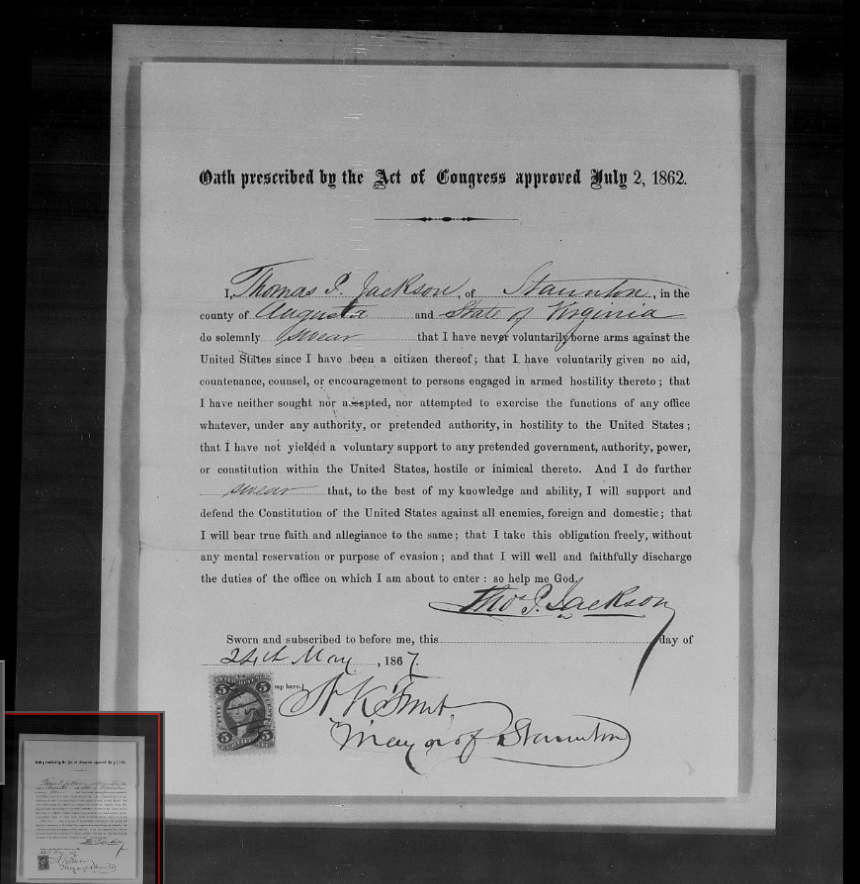
I decided to participate in the Smithsonian’s Transcription Center, a crowdsourced initiative tasked with transcribing various letters, memos, and documents housed within the Smithsonian’s historical collection. The Smithsonian Transcription Center has a wide variety of projects for users to choose from such as the Archives of American Gardens and the National Postal Museum with general themes of archival and museum collections ranging from African American History to World Cultures. Though it was difficult to choose a specific collection that I wished to participate in, a majority of the provided collections/themes were completed with no new transcription projects currently in place, so I decided to participate in transcribing the Virginia Assistant Commissioner collection, which contained a large amount of unprocessed documents such as letters, telegrams, and registers from 1867 onward waiting for user transcription. The link to my specific contribution within this collection can be found here.
The Smithsonian’s large social media presence and long history of crowdsourced transcription projects (originating back in 2014) served, personally, as my initial draw towards their online projects. The Transcription Center has been mentioned in a slew of online articles, GLAM resources, and multiple times throughout various Wikipedia pages detailing a variety of online crowdsourcing museum initiatives. The Smithsonian’s notoriety is specifically mentioned in the article “Inviting Engagement, Supporting Success: How to Manage a Transcription Center” as one of the major draws towards the museum’s transcription projects: “… it has become clear that we entice new participants first through brand reputation and social referral and then through media coverage and by sharing site and project updates in social media” (Ferriter, p. 104). Additionally, the Smithsonian relies on word of mouth from volunteers to family and friends as a sort of “social referral,” citizen science databases, press coverage, a variety of online and in-person events relating to the Transcription Center, and– as aforementioned– general social media presence with the creation of social media-specific tags such as “#volunpeers” (Ferriter, p. 104). Taking into consideration both the Smithsonian’s long history and notoriety as a museum in conjunction with their large social media presence on a variety of online platforms, it is apparent that the museum is attracting professional academics of a wide age range in addition to general individuals with a casual interest in history and museums– essentially covering all bases and taking careful consideration into appealing all individuals with their transcription projects.
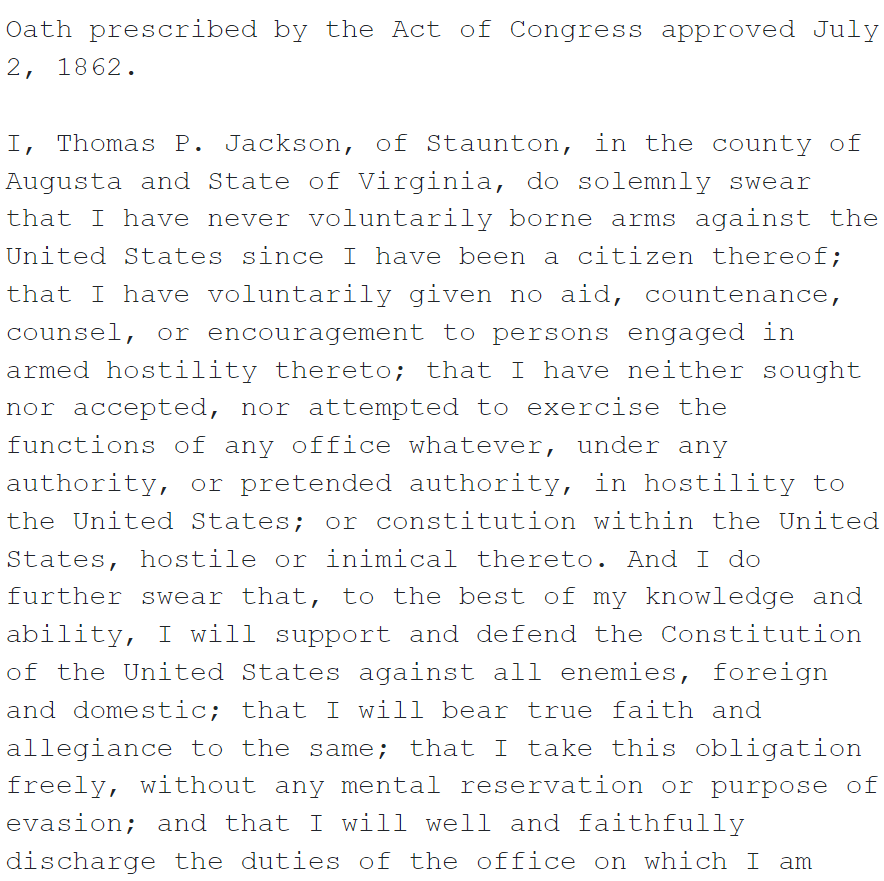
The Smithsonian’s Transcription Center is straight-forward and easy to use. Despite my initial troubles finding a collection to work on, the process itself is self-explanatory. However, a personal weakness of mine is reading cursive, so when searching for a document to transcribe, I sought one that had little-to-no cursive to ensure my transcriptions were as correct and as close to the source material as possible. Despite this, there were still a few judgment calls I had to make when typing out my transcription, such as the cursive signature of Thomas P. Jackson, which seemingly excluded half of his first name to read only “Tho P. Jackson.” I initially considered writing his full name for the transcription of his signature, but given this is not fully included in the source material and my goal of staying as close to the actual document as possible, I wrote his half signature but included a note in brackets listing his full name: [Thomas P. Jackson] for future users referencing the document. Additionally, I was unsure of the text on and below the stamp in the bottom left-hand corner, and, thus, left it out of my initial transcription. Conveniently, the Smithsonian Transcription Center allows users to save a draft of the current transcription and unlock it for others to add contents. A day later, after reopening this particular document’s transcription, another user was able to read and distinguish the lettering on and below the stamp and included it in the transcription, noting: “U.S. / Inter. Revenue. / 5 5 / 5 5 / Certificate.” I greatly appreciated this feature as it encourages collaboration between users and doubly ensures that documents are properly transcribed at multiple levels with this one demonstrating a user-by-user type verification.
Beyond the informal and unofficial transcription verification made by users, the Smithsonian Transcription Center also had designated, official transcript verifiers. These verifiers were sent documents marked as completed by volunteers and formally reviewed the editing history and, if necessary, made changes or added notes. Noted as a three-step process via the Smithsonian Transcription Center “General Instructions” page, the steps to verification are as follows:
- Transcribe- volunteers work together to transcribe a document. When finished, can request review.
- Review- a new volunteer reviews transcription. Can approve or send back for more edits.
- Approve- Smithsonian staff approves transcription or sends back for more edits.
Transcription center review staff consist of users which have created an account with the museum. While anybody– log-in or not– can transcribe documents and send them out for verification, only those with log-in information can formally review, edit, send back, or approve transcriptions which are then sent for a final verification process to official Smithsonian staff members. Various Smithsonian Transcription Center resources depict this process and many others such as community guidelines/mission statements and frequently asked questions. Overall, my experience with the Smithsonian Transcription Center was a positive and seamless one. This institution provided a large variety of potential transcription projects (even if a majority were currently completed) allowing for users to curate their own experience and account for personal historical interests. However, as somebody that has a vast history of volunteering in various GLAM institutions, I could see the reliance on volunteer labor for the continuation of the Transcription Center to be somewhat problematic. While it may be beneficial to rely on the culture that is volunteer work for these sorts of GLAM crowdsourcing initiatives (i.e. finding dedicated volunteers consisting of those with vested interest in digital cultural humanities, museums, historical research, etc.), it may doubly be wary to rely on volunteerism and continued community involvement, whereas “the success is built upon a long-standing tradition of volunteerism and involvement of citizens in the creation and development of public good” (Digital Cultural Heritage and the Crowd, Owens, p. 122) as such traditions may, in time, become less feasible and emphasized throughout generations. As such, relying merely on the fact that, currently, volunteerism is a popular tradition throughout crowds of citizens, should be de-emphasized and social media strategies (such as those employed by the Smithsonian) should take center stage when gathering volunteers for GLAM projects. In conjunction with social media strategies and opportunities for workshopping events, in order to retain volunteers within an institution, it is integral to provide meaningful work for volunteers– not those “that could easily be transcribed by computers” (Owens, p. 128). Though GLAM work, generally, has a tendency to be repetitive and tedious, the point of volunteerism and crowdsourcing in GLAM institutions is not about the completion of said repetitive and tedious labors but “… providing meaningful ways for the public to enhance collections while more deeply engaging and exploring them” (Owens, p. 128). Thus, rather than simply relying on the tradition that is volunteer and public service work, enticing social media initiatives that speak on a multi-generational level in conjunction with providing exciting, engaging, and meaningful tasks for volunteers should be emphasized in GLAM settings. My experience with the Smithsonian Transcription Center is a fantastic example of such an institution adopting said practices successfully as the large amount of volunteer engagement (seen purely through the substantial number of already completed transcription projects) is clearly evident.
Citations
Ferriter, M. (2016). Inviting Engagement, Supporting Success: How To Manage A Transcription Center. Collections (Walnut Creek, Calif.), 12(2), 97–116. Https://Doi.Org/10.1177/155019061601200204
Owens, T. (2013). Digital Cultural Heritage And The Crowd. Curator (New York, N.Y.), 56(1), 121–130. Https://Doi.Org/10.1111/Cura.12012
Websites & Links Utilized
Smithsonian Transcription Center: Community Guidelines
Smithsonian Transcription Center: General Instructions
Smithsonian Transcription Center: Home Page
Smithsonian Transcription Center: Frequently Asked Questions

Leave a Reply
You must be logged in to post a comment.