The Start of the Linnea Eberhart Star Wars Mug (Digital) Collection

(or how I fell into collecting novelty Star Wars mugs)
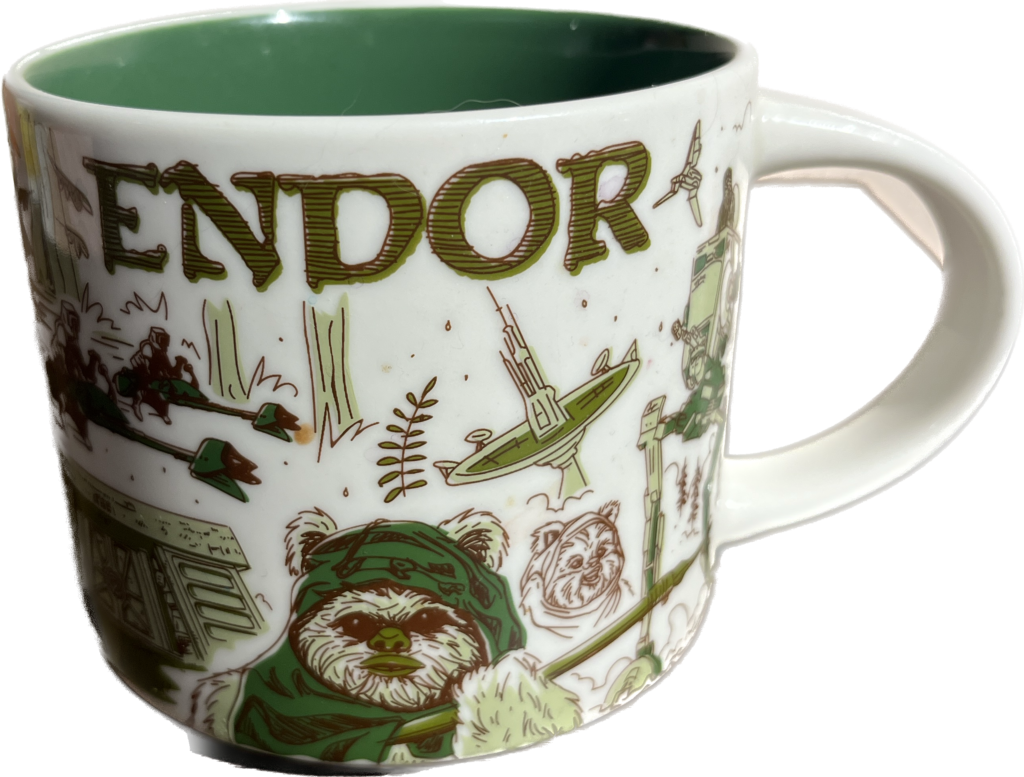
A long time ago in a galaxy far, far away, I became a collector of all things Star Wars including novelty mugs. My very first mug was innocently gifted to me by my parents – if only Admiral Ackbar had been there to warn me, it was a trap! In the intervening years, my collection has grown exponentially both in size and variety. Now I can’t seem to say “no” to Star Wars themed kitchenware, especially if it features Grogu aka the ultimate Disney marketing gimmick. I can’t help it, I love that little guy!
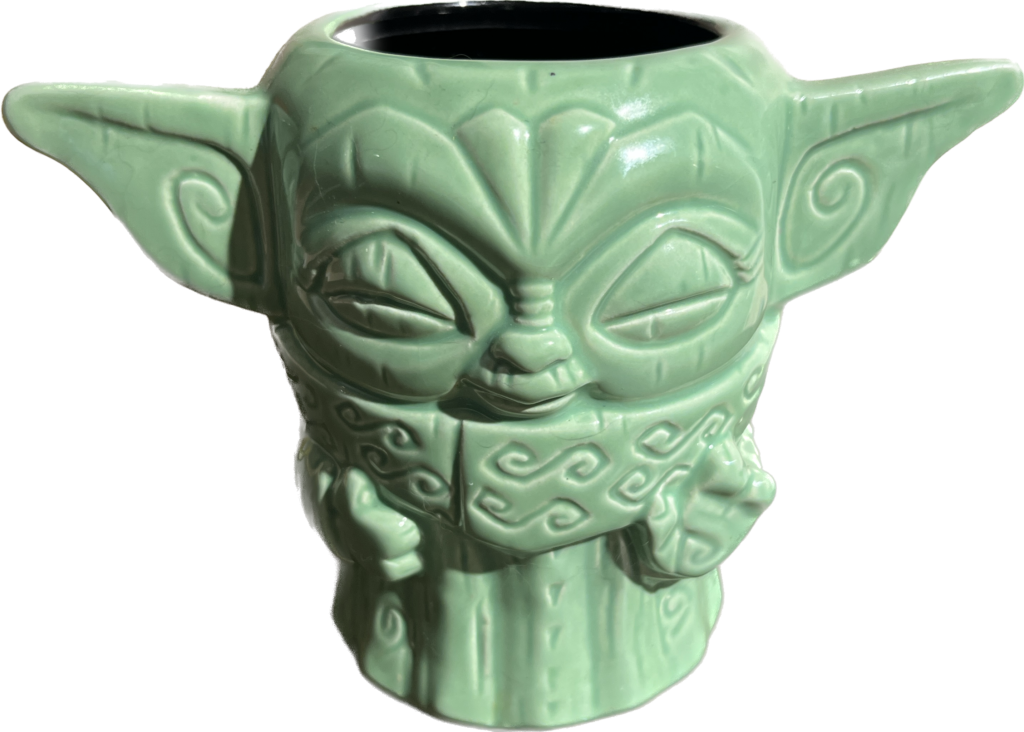
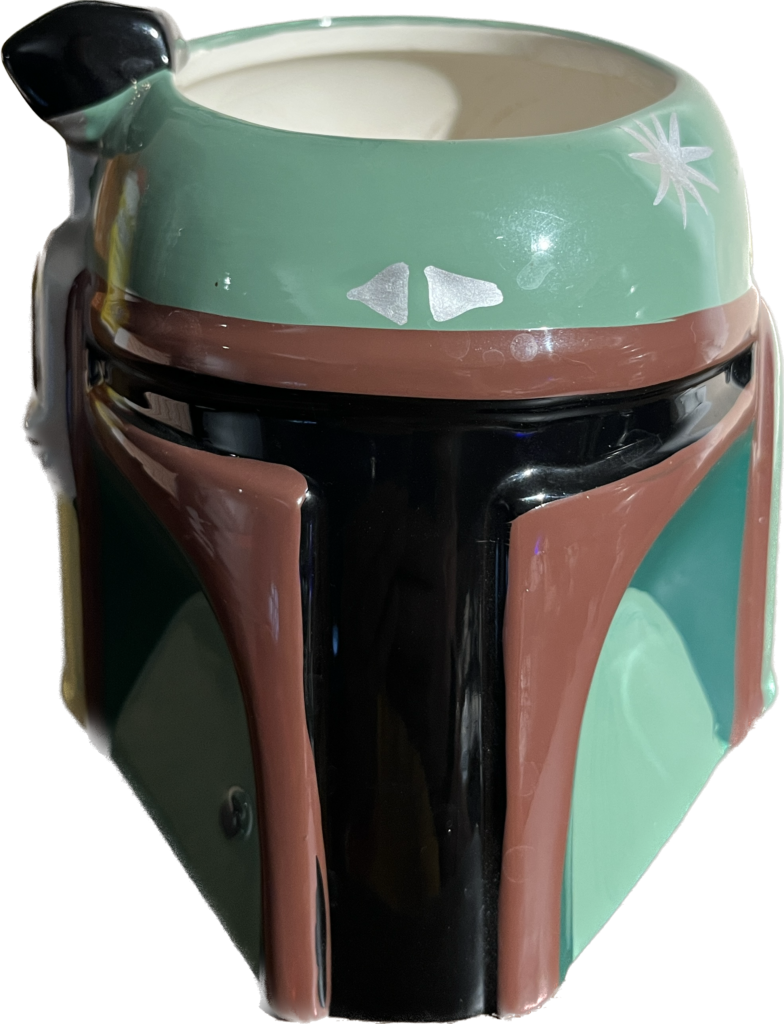
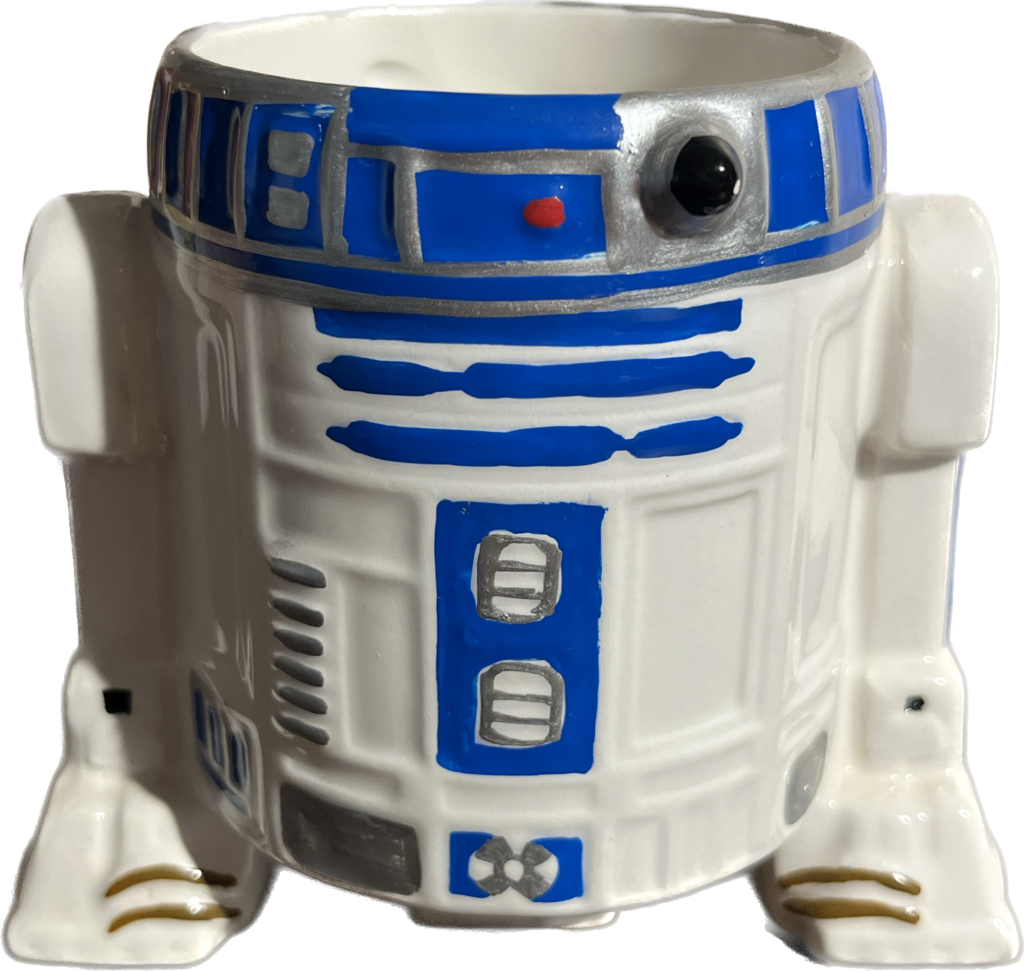
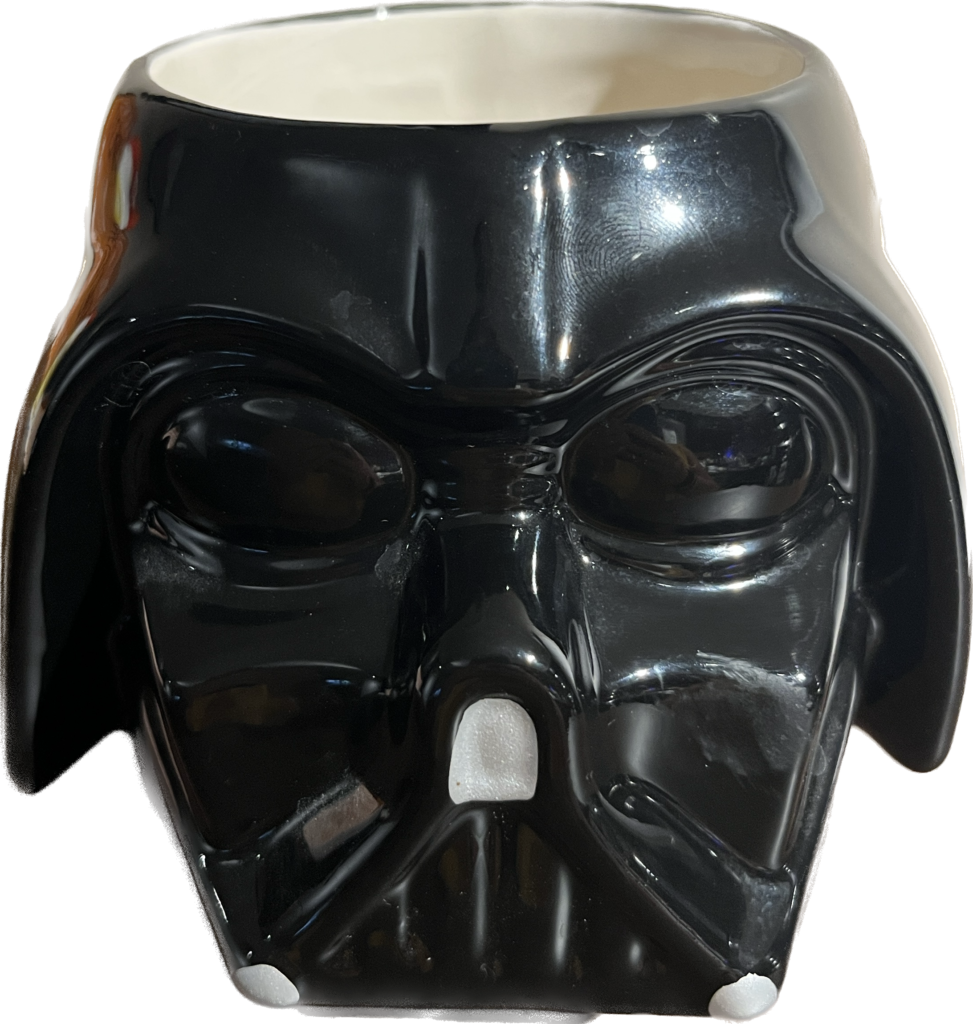
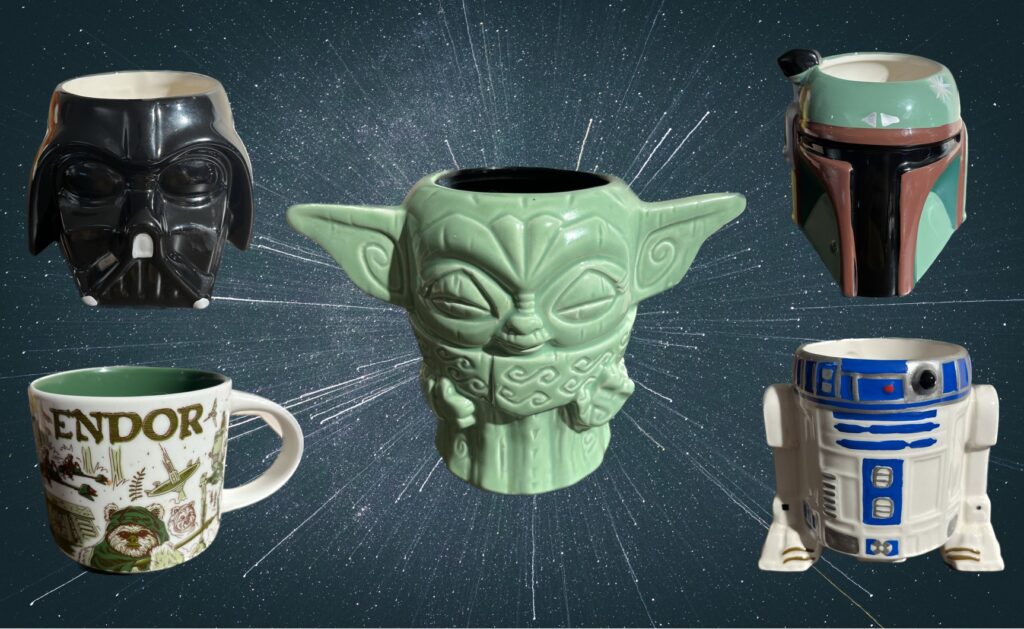
Click on a mug to learn more!
Although these five mugs are only a small portion of my novelty mug collection, they are indicative of the collection as a whole and represent a variety of styles, creators, and subjects. Each item has either been purchased by me or gifted by a relative or friend over the last twenty years and as a result the collection spans the entirety of the Star Wars franchise.

Choosing Metadata Fields
In building my digital collection, I gave careful consideration to each of the Dublin Core elements and whether they do (or do not) adequately encompass the details on each of the items in the collection. In addition to identifying each individual item, it was important to choose metadata fields that would be universal to all of the items in the collection (not just the ones selected for this sample) as well as fields that would relate the items to each other and the collection as a whole. To that end, I chose the title, description, accrual method, creator, date, rights, rights holder, and subject metadata fields.
- Title & Description – these are the main fields used to identify each item and are focused on the characters or subject displayed on each mug.
- Accrual Method – this field was important for personal reasons in determining which mugs were purchased by me and which were “donations” to the collection i.e. gifts. I used the Dublin Core™ Collection Description Accrual Method Vocabulary for this field.
- Creator – this field is important to determining the source of the item which could be used to facilitate future acquisitions.
- Date – this field was based on the date on each mug and was used to create a timeline not of the acquisition, but of the age of the items relative to each other.
- Rights & Rights Holder – together these fields distinguish officially licensed items from unlicensed items in the event further intellectual property statements may be needed.
- Subject – the purpose of this field is to provide a searchable index of terms to group related items together within the collection.

Challenges in Building the Digital Collection
At this early stage, building a digital collection of only five items was relatively challenge free. However, I can anticipate future challenges in growing the collection based on the metadata fields and knowledge required and the intended purpose of creating the digital collection.
First and foremost, the collection relies heavily on knowledge of the Star Wars franchise in both building the collection and utilizing it for future acquisition or reference purposes. The title, description, and subject are all intended to serve as searchable terms, however those searches will only be of use if the user knows what to search for. Even users with prior Star Wars knowledge may face challenges if a controlled vocabulary is not implemented particularly for the subject searches. For example, I envision a user searching by character to determine how many mugs of that character exist in the collection – but a user could very well search for “Baby Yoda” instead of “Grogu” given that the former is a commonly used nickname for the latter. Additionally, I used the terms “Original Trilogy,” “Prequel Trilogy,” and “Sequel Trilogy” to indicate which trilogy each mug originates from but there are other names that can be used to reference trilogies including the actual titles of each of the movies. There are also numerous other television series, video games, novels, and comic books within the franchise that would need to be given established references in order to facilitate an effective search.
Challenges may also arise when it comes to cataloging the items themselves. I chose five mugs that happened to feature five different characters or subjects which made titling them fairly simple. The physical collection though definitely includes multiple mugs of the same character or similar themes so more detail will likely be needed for the titles in order to distinguish them – my Grogu collection alone would render the current titling scheme useless! I was also surprised by the amount of information contained on the bottom of each mug including the date, creator, and rights information. I expect there are mugs in the collection that don’t include this information which would make cataloging them more of a challenge as well.

Digital Exhibits within Museums
It seems to me that the impact of digital exhibits within museums varies widely based on the content of the exhibit and whether it “adds” anything to the already existing physical exhibits. Take the exhibits I’ve made for my Star Wars mug collection for example – they may be useful or interesting to a private collector, but I don’t think they really create an engaging or interactive experience for a museum visitor. I mean, would they necessarily care what company made the mug? Or is it cooler just to see Darth Vader’s head as a mug? And I don’t think it would be particularly engaging as an online exhibit either, unless people just wanted to see what types of Star Wars mugs are out there. If the goal is to educate, entertain, or engage an audience, then I think there needs to be more personal information or interaction for a digital exhibit to be of value to museum guests. In this case, if I added more information about their acquisition or how they relate to the history of Star Wars merchandising – which is a fascinating subject – I could see the digital exhibits as being of interest to Star Wars fans, people who enjoy personal histories, and those interested in advertising and merchandising. Additionally, if there was an interactive component that linked the mugs to the larger Star Wars franchise as whole that could be interesting as well although this would probably be of more interest for more significant Star Wars memorabilia than just my mugs. There’s some really cool Star Wars merch out there and it pops up in the craziest of places!
On their own, I can see exhibits like these being incredibly useful for museum administrators as having access to these records would aid in determining what items are available to display physically or loan to other collections. It would also aid in future acquisitions as museum staff could easily determine what was already in the collection and where there may be gaps just like I did when I realized I don’t have any Ahsoka mugs! Digital exhibits would also be of use in the valuation of a collection and for purposes of insurance coverage, including having records of the items in the event of damage or theft. In some ways, digital collections are the Force of museums (and libraries)!
The Force is what gives a Jedi [their] power. It is an energy field created by all living things. It surrounds us and penetrates us; it binds the galaxy together.
Jedi Master Obi Wan Kenobi
There are definite benefits to creating digital collections but I can see how the scope of such an undertaking can be daunting. The size of the collection, the necessity of creating and enforcing a controlled vocabulary, and even just trying to implement the system with multiple people and accounting for human error are enough of a challenge to make one seriously consider even starting. While I was an undergrad, I worked as a records technician in a doctor’s office and I remember what a headache it was when they started transitioning to digital records. The doctors didn’t like the system and would keep printing things, no one filed things in the same place twice, we changed software like three times, and everyday I had a literal mountain of paper to scan. But once we got the system up and running and got the old records cataloged, it made processing new records a lot easier. I’ve found the same to be true of my personal record keeping – those early days on Google Drive were rough but now it’s almost second nature to upload basically my entire life and organize it for easy use and access. There are of course challenges in maintaining and updating these systems as well, but I think getting started is the biggest obstacle and if museums are willing to invest the funds and, more importantly, the time in developing a digital system at the onset, it will yield a digital collection that is of incredible import and value for the museum, its patrons, and generations to come.

Leave a Reply
You must be logged in to post a comment.