This digital object collection consists of five souvenir art magnets from my travels to museums and chapels around the world where the original artwork is located. Souvenir art magnets are a great way to bring a little piece of the experience home with you, and they are quite affordable.
This collection of magnets depicts artwork spanning more than 700 years. Starting with Giotto’s Kiss of Judas from the Middle Ages and into the Renaissance with Michelangelo’s Creation of Adam. The exhibit then dives into the 19th and 20th centuries with The Kiss by Francesco Hayez, La Ghirlandata by Dante Gabriel Rossetti, and Votes for Women, Equality is the Sacred Law by Egbert Jacobson.
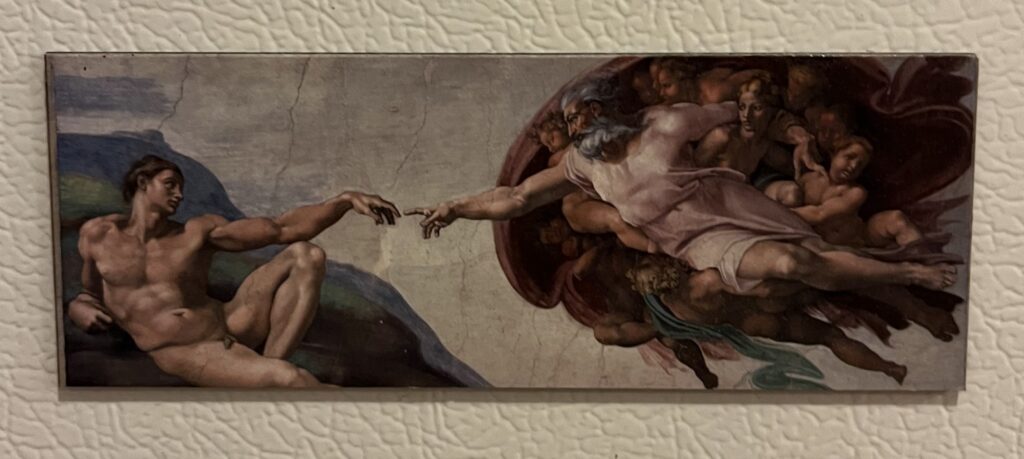
Each record contains five fields: title, description, contributor, type, and depicts. These fields serve a unique purpose to help users find pertinent information while researching. The title field was required as part of the assignment and serves as an identifier for the record to describe what the item is. The description field was also a required field and explains characteristics of the item and where it is from. The contributor field was also required and explains who created the record. The type field identifies common characteristics between the items and uses a controlled vocabulary which would be useful should linked data be used. Different categories of object types could be identified through this field. Finally, the depicts field identifies the artwork title, artist, year, and location of the work shown on the magnet so the user can refer to the original work if needed.
The most challenging part about this exhibit was selecting a topic, as there were too many items in my home that could compose an exhibit. I imagine this is how museum professionals feel when they have thousands of items to choose from to create an exhibit.
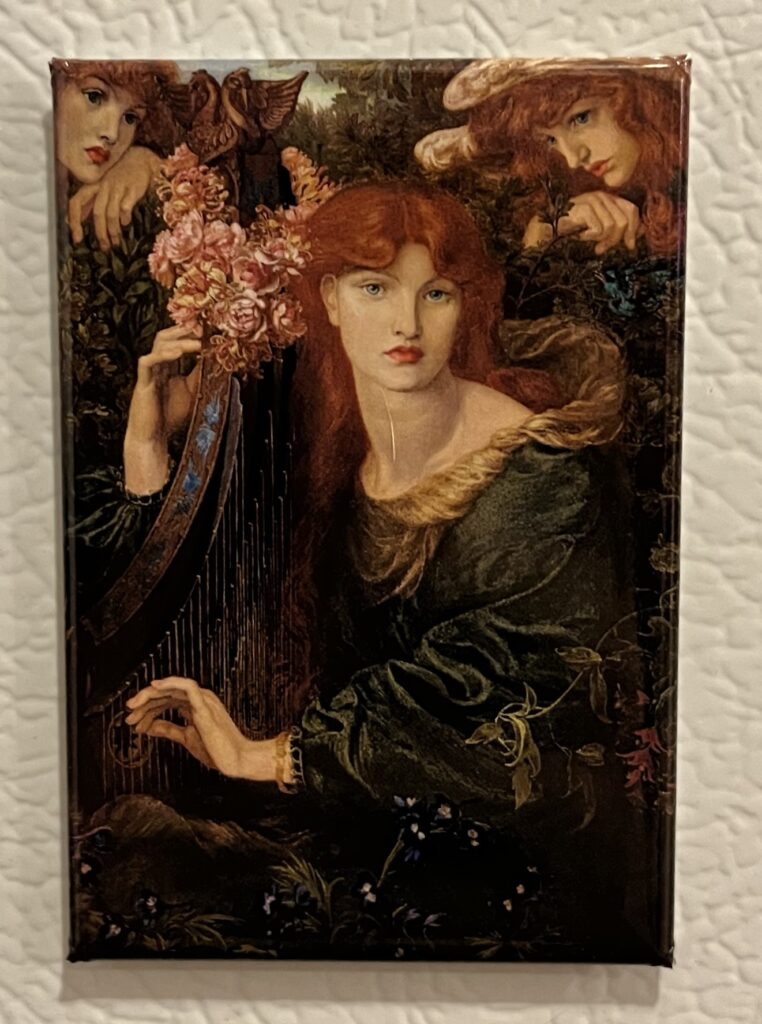
The items in the current form of this exhibit could have been described in several different ways. Rather than leading with the museum location, I could have described the permanent home of the artwork. For example, La Ghirlandata by Dante Gabriel Rossetti and Votes for Women, Equality is the Sacred Law by Egbert Jacobson, were only on loan to the museums where I saw them. Additionally, I could have selected different fields that would have shifted the focus of the exhibit to the museums where I saw the objects and changed the exhibit to be more about museum exhibitions. Had I made these alterations, the focus of the exhibit would have been more on the artwork and museums rather than my travel experiences.
Digital exhibits like this one are an important tool for museums because they allow more people to see and experience the collections. By having collections online, individuals living close by without transportation or hundreds or thousands of miles away can still see culturally significant collections. However, I do recognize the challenges that come with creating digital exhibits. Between the equipment needed to digitize collections to the staff time that comes with building the website, cataloging the collection, maintaining the online exhibit, and then promoting the exhibit to the public, digital exhibits require significant time and monetary commitments. To help mitigate these costs, museums could collaborate with universities so museum studies students could digitize collections for free under the guidance of museum professionals. Museums could also work with one another or other agencies, like archives and libraries, to digitize collections. This would help lower the costs, and may ultimately create more engaging and diverse digital exhibits because they would incorporate different perspectives and areas of expertise.

Leave a Reply
You must be logged in to post a comment.