Jonathon Samuel “Sam” Zorn
A Historical Collection
History has always been my favorite genre as a kid, so much so that I had collected records of historical events and replications of historical objects. One such subgenre of history that I thoroughly enjoy is military history, which is the theme of this collection. For this exercise, I have chosen five objects from within my house for the collection. The common theme that connects these items together is the Second World War, with a majority of them being books written about the war. The following objects within the exhibit include:

Secret Operations of World War II by Alexander Stilwell


Band of Brothers by Stephen E. Ambrose

The Atlas of World War II by Dr. John Pimlott and Alan Bullock
Metadata Fields
When choosing metadata elements, I tried to stick with those that would offer the necessary information required to get viewers interested in the items. Each field was designed to tell that object’s story to the viewers: how it was created, when it was entered into the collection, what it is about, and so forth. I was already familiar with the Dublin Core Metadata System from my experience with prior classes and internships, so I selected all my fields from the DCMS due to my familiarity with it. With that said, despite the default fields of Class, Title, and Description, I chose the following metadata fields within Dublin Core:
Creator – Since these are all physical objects, it’s only logical that they have creators. Thankfully, the objects provided offered the necessary information as to who created them, or at the very least where they were created from.
Date Submitted – Since I do not remember when I bought each of these items or when they arrived via mail, I settled with adding this field so that people will know when they were submitted into both the item set and the exhibit.
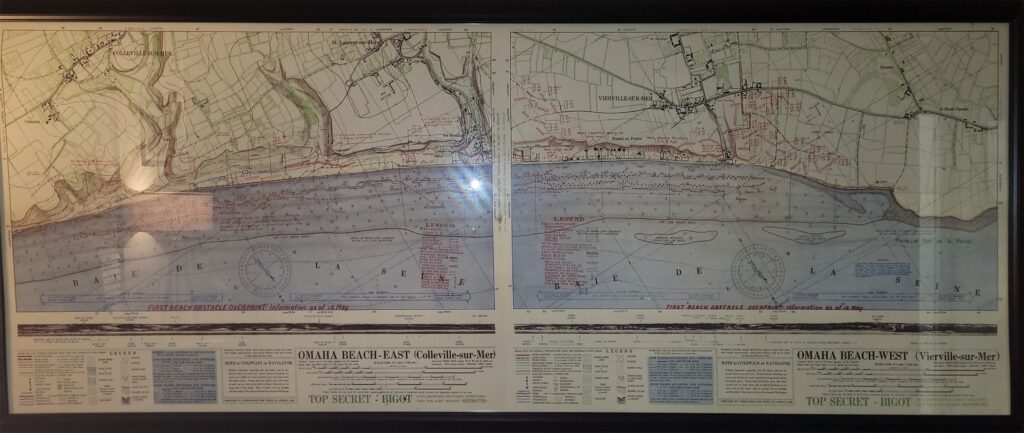
Format – The dimensions of the objects are important to record; Each of the books have different dimensions, with those dimensions being determined based on the size of the information provided by the creator. Since the Map of Omaha Beach was a flat object, I only measured the dimensions based on its width and length. Those designated dimensions remained consistent with the other objects within the exhibit.
Language – For this field, I felt that it was necessary to let viewers know the main languages prevalent in the objects. While most of the objects have English as the predominant language, there are also other languages present in the works as well, such as how the Omaha Beach Map has French as well.
Rights – For this field, it was important to let others know who possess the copyright and licensing rights. Many of the right holders that were featured in this field include the creators, the publishers, and the contributors.
Subject – This field is included to allow viewers to get a firm understanding of what underlying subject and theme connects all of the objects in the exhibit together. for the purpose of this exhibit, the Second World War is the underlying theme that encompasses the whole of the exhibit and the items entered into it.
I struggled with a few things when selecting my desired fields, mainly with deciding which fields would be important for my exhibit. Though there were other elements and other metadata systems to choose from, I ultimately chose the Dublin Core Metadata System for both its simplicity in comparison to the other systems and my familiarity with it. Also, I was concerned with showing who possessed the rights to the objects. I had earlier used the “License” field before replacing it with the “Rights” field, that was I was able to convey who had both the copyrights and the licensing rights to each object.
In terms of Omeka S’s ease of use, I felt that it was fairly easy to use. It also helped that I was already experienced with normal Omeka prior to using Omeka S in this class. If I have only one complaint, it would be in its inability to move fields at ease, much like moving the blocks on WordPress. I had wanted to arrange the fields in alphabetical order vis the first initial in the field. However, when I replaced “License” with “Rights”, I was unable to do so, lest I have to replicate the information into newer fields to replace the old. It felt more tedious and time-consuming, at least in my honest opinion. Aside from that, the program was easy to use for this project and other projects to come.
So far, I think the metadata schema already in place, from Dublin Core to Bibliographic Ontology, were suitable for describing these pieces, such as the one displayed in the Metropolitan Museum (see the link here for an example shown below the image). The metadata system used by the Met hits all the right areas: the creator, the date the object was created, the medium and dimensions of the object, etc. While I do understand that certain situations may require more advanced and customized metadata systems, the Dublin Core Metadata System has stood out as the easiest to use and the most reliable metadata system so far.
Digital Exhibits in Museums
Digital exhibits are innovative and intuitive, for the most part. They each bring about a new type of interaction between the audience and the object. One such example would be the British Museum’s “Museum of the World” digital exhibit. Developed in partnership with Google Arts & Culture on February 2020, at the height of the COVID-19 pandemic, the exhibit allowed Internet users to interact with the objects stored within the museum following the museum’s closing at that time. The digital exhibit allows users to visualize links and connections between, as well as filter through, the objects of different civilizations at different time periods, all of which are featured in the British Museum’s collections. To that end, it allows users to take an interactive, self-directed course through the material history of human civilization.
This type of interaction between museums and audiences on the digital plane, while steadily growing, has become much more prevalent in the face of crises and catastrophes such as COVID-19. It allows for users to continue interacting with museum objects even when they’re unable to go to the museum due to said crises. Though the British Museum did show that it can be done, there are still some challenges facing museums that were not prepared for catastrophes and don’t possess the resources required to make digital exhibits, especially with museums located within Third-World nations and regions.
While it may be important to possess a digital exhibit in case of emergencies, there is also the risk of having the exhibit become poorly designed or having critical information be absent from the exhibit. In the case of the former, a digital exhibit that is poorly designed and possesses poor user interface can result in poor popularity and result in the museum removing support for the endeavor. This would be detrimental for those who have hearing or visual impairments, as a digital exhibit, with proper user interface and design, can enhance their user experiences in a manner not found in physical exhibits. Regarding the latter issue, one such example would be found, again, in the British Museum’s Museum of the World. The exhibit came under scrutiny due to the absence of an acknowledgement of the British Empire’s colonialist history, which significantly impacted the development of the nations that fell within their domain.
With that said, I can definitely see many museums collaborating wither with each other or with third parties in developing digital exhibits, especially when they have received a baptism of fire through the COVID pandemic. They expand their audiences and enrich the information present within their objects in innovative and exciting ways. However, this new age of digital exhibits comes with the risk of poor designs and user interface, as well as the absence and possible censorship of critical information about the objects and museums. To that end, museums must keep those risks in mind when developing their own digital exhibits if they wish to have their exhibits be well-received with their desired audiences and potential visitors.

Leave a Reply
You must be logged in to post a comment.