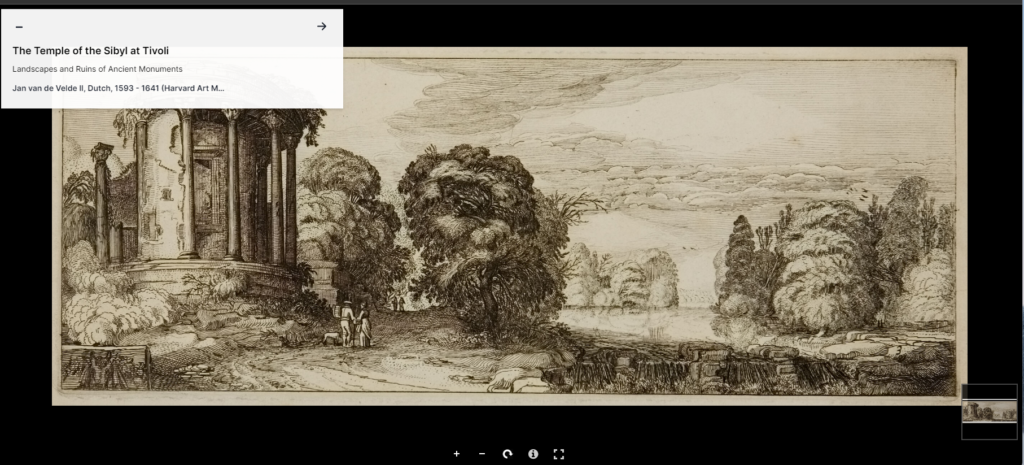
I decided to try Exhibit.so for this assignment and show The Temple of the Sibyl at Tivoli displayed virtually by the Harvard Art Museum. This monument located in Tivoli, Italy has many interpretations from elaborate paintings, to basic etchings. When I saw it listed on Harvard’s online collection I jumped to work with this piece for my own Exhibit.so collection. I had no experience using Exhibit.so or IIIF manifests until now. I found that using and finding the IIIF was the easy part of this assignment. Harvard Art Museum’s website made the layout of commands easy to see and access right under the digital object the user is viewing. The Exhibit.so has a disorganized webpage. The system has a very basic website but nothing was clear on how to start a collection unless you scroll half way down the page and only then you see where it says create. The system did not offer a tutorial when creating a collection either. This system would be beneficial for someone who knew exactly how everything was laid out and how to operate the site. If someone was comfortable using this system they could create collections on a more professional level. I rewatched our class recording to see if I was using Exhibit.so correctly. I also found some videos on Youtube about how to navigate the site and how to create your own collection which were very helpful.
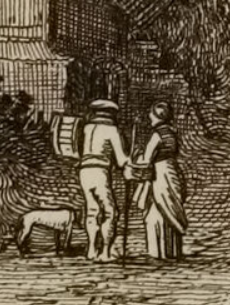
I zoomed in and took a screenshot of the man, woman, and dog. I thought it would be interesting to see this up closer since it could tell a whole other story just by cropping out the rest of the picture. It was a little confusing at first on how to use the zoom feature on Exhibit.so. It took a couple of tries before I finally figured it out. There were no instructions listed on how to do this step either and I spent nearly an hour trying to zoom into different parts!
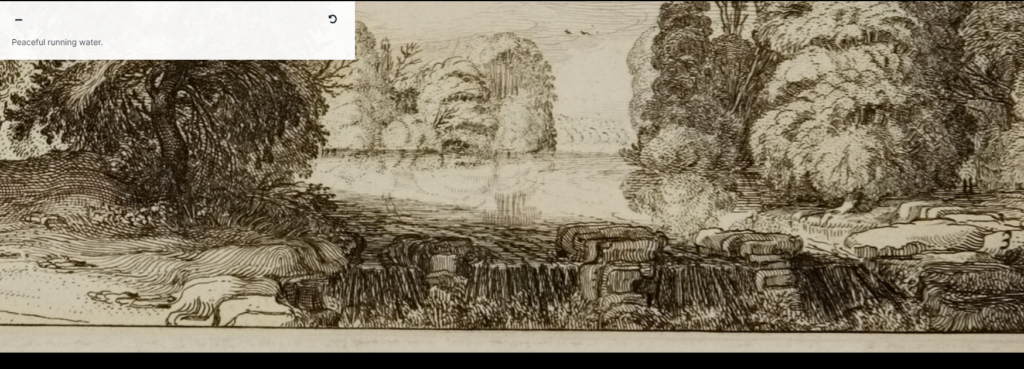
I zoomed in and took a screenshot of the running water near the ruins. The peaceful little waterfalls could be a drawing all on its own. Since there are so many renditions of this place throughout history it was interesting to see this etching done by Jan Van de Velde.
The benefit of using systems like Exhibit.so for museums and libraries comes down to training and a collections department. Museums and libraries could use this system with the right training for marketing or to showcase collections for research purposes. It could improve audience engagement by reaching out to those who live at home, have too busy of a schedule to visit a museum or library, and for research. Exhibit.so reminded me of an experience I had the privilege of seeing in Miami; Van Gogh the immersive experience. In this virtual exhibit the audience can see all of Van Gogh’s work in one place and be immersed by the paintings and drawings on the floors and walls of the exhibit. Technology like Exhibit.so has the potential to create and share collections and information like never before.
Library, archives, and museum professionals that work with any form of a collection would definitely benefit from a system like Exhibit.so. Researchers or parties interested in certain physical objects like older paintings or manuscripts could look at the virtual collection first and have access to information online. Institutions could benefit from using these types of systems by promoting their collections to the public or its students. Promoting or showcasing objects virtually for others to see could benefit an institution for many reasons. For example the benefits could be monetary, prevalence in the museum world, or a way for others to access information.
It appeared that the Exhibit.so website had technical difficulties everytime I wanted to add another photo so I decided to work with just one photo and use the zoom features. I was unsure if this was because of my own computer or their system. I think that if large institutions use this system they might have even more issues trying to handle the influx of users or limit their collections. Challenges other than technical issues for implementing this system would be training, and time aside from other projects for employees who would want to use this system. Realistically, this would fall to the librarian or collections team if done at a library to catalog a special collection. It falls under the long list of things to do as a special project at a library. However, I do think the system and training could be shared with everyone so that more staff could use and create special collections to share.
Creating a virtual collection with Exhibit.so had its challenges but in the end worked out well on this small scale project. I think it’s definitely for smaller collections and maybe not for institutions unless revisited by its creators. Exhibit.so should redo the layout of their website and reconfigure the system if they want to expand the reach of their users. If museums or libraries use Exhibit.so at this time it might be a bit time consuming uploading each digital object and their IIIF. The system might be overloaded as well with a large collection being imported. Regardless of its downfalls Exhibit.so was a fun learning experience on how to use IIIFs and create virtual collections.
Reference
Velde, J. van de II. (1593 – 1641). The Temple of the Sibyl at Tivoli. M24774. Harvard Art Museums collections online. Oct 24, 2023, https://hvrd.art/o/197886.

Leave a Reply
You must be logged in to post a comment.