Quire, the open-source digital publishing tool, is chock-full of seemingly endless means of customizability ranging from extensive multimedia options and Markdown language support to its simplistic organization and website design while still allowing for the user to upload their own images, galleries, table of contents and search functionality. However, due to Quire’s aforementioned grand abilities of customization, the tool does have complexities for implementing such customizations– such as the tool’s need for prior user knowledge of Windows PowerShell and command-line coding (albeit beginner knowledge is sufficient for Quire’s most basic functionalities) and extensive dependence on text editing software. It is through this text editing software (though also in conjunction with Windows PowerShell) where the user will be editing the project via the implementation of code and Markdown language and attaching images and other media.
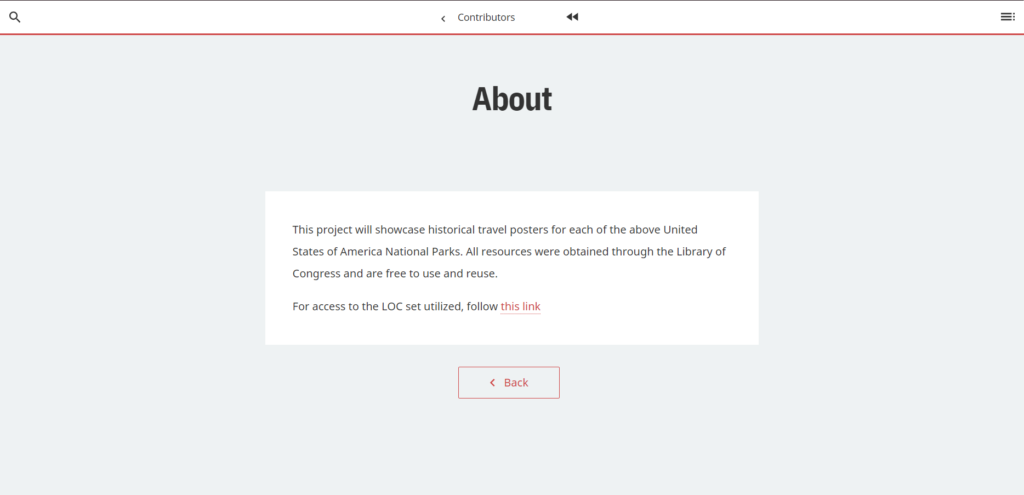
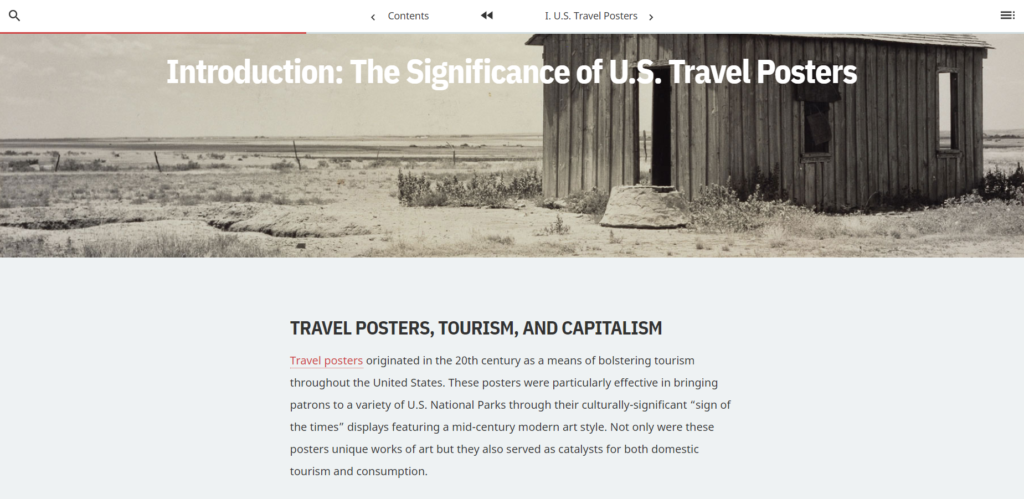
As such, given Quire’s endless possibilities of customization and extensive use of the Markdown language, this tool was quite a technical hurdle for me. As a user that has a very basic understanding of computer knowledge beyond the scope of emulation or graphic design, Quire, in itself, was a general challenge. Though Quire’s basic tutorial was of great help when first creating my project, I struggled with fully customizing my project– particularly, I was unable to figure out how to edit the “Contributor” section of my project and, when attempting to edit such section under “content,” “data,” and “publications.yaml,” I would only receive and error in both Windows PowerShell and my localhost website. Additionally, though the Quire basic tutorial contained a section as to how a user can upload their own images and attach them to their project, I was unable to figure out how to upload them to my text editing app (or the correct file address) nor was I able to change the preview images at the top of each page of my project and left them at their “default” images. I appreciate the tutorial provided by Quire but it did not contain the necessary steps for all customizability options and, thus, a lot of my project was left to my limited knowledge and judgment of such technology.
Though I had some personal troubles operating and understanding Quire, I am able to recognize the wide possibilities of customization and the potential for digital museum accessibility utilizing this tool. The projects in which Quire creates (i.e. websites, books, and PDFs) are simple in appearance, easy to read and flip through, and provide users with multiple viewing options for ease of use and accessibility which, according to Inclusive Digital Interactives: Best Practices & Research, is of particular importance and notes “A museum isn’t a novel, it’s a magazine. Flipping through it, you should be able to quickly identify where you’d like to spend your time” (Page 15)– a functionality in which Quire excels in and encourages users to implement multiple pages and chapters within their project while maintaining a simple UI. Additionally, for users utilizing screen readers, Quire allows for viewers to curate their own appearance and experience– especially in the case of websites– where viewers can switch to a PDF format easily and Quire allows for the inclusion of alt text within a user’s project, making it all the more enticing for a variety of museum patrons with differing levels of ability and ableness.
Beyond considerations of accessibility regarding patrons, however, lies the importance of digital exhibit technologies and tools such as Quire for LAM professionals and institutions; particularly, the problems associated with limited space– a frustration that has plagued LAM professionals for decades. According to the article “Virtual museums, a survey and some issues for consideration,” digital museum tools such as the utilization of the World Wide Web, the incorporation of three-dimensional visualization tools and other information technologies “provide solutions to issues of space limitation, of the considerable exhibitions cost and of curator’s concerns concerning the fragility of some museum artefacts” (Page 520). Quire, as a platform, is especially well-suited for these concerns of limited space in LAM settings given the platform’s ability to create websites, books, and PDFs with ease (assuming the user(s) are experienced in information technologies) and the platform’s support of high-resolution imaging and expansive zooming capabilities while maintaining said native resolution. While libraries, archives, and museums may be unable to keep collections on display in-person for more than a couple years, Quire allows for information professionals to have their collections live forever through an interactive website, book, pamphlet, or printable PDF.
However, as stated earlier, Quire requires professionals (or, more generally, the platform’s users) to have prior knowledge in information technologies and basic coding/HMTL/XML for the tool’s capabilities to be utilized to its highest extent. Thus, employee training is necessary if LAM institutions were to consider implementing Quire within their collections. Though the aforementioned Quire basic tutorial is helpful, it is only of use for the platform’s most, well, basic functionalities. Of course, when considering staff training, it is important to consider where and who will be conducting these training sessions. Quire’s website under the “Resources” tab does provide a few YouTube videos of basic “how-to’s,” though none are expansive enough to fully train an employee on the platform’s functionalities. Thus, it would be necessary for libraries, archives, and museums (or their city/county-wide system) to create their own training videos and webinars to familiarize employees with the platform. Given the general LAM trend of limited funding (in most cases) and time, the lack of tutorial resources on Quire’s end may prove to be a substantial problem for institutions interested in implementing Quire.
Additionally, problems of standardization of exhibits, collections, and resources come into question when adopting any new information technology tool. Though this topic has been touched on involving a variety of metadata techniques, such as in the article “Investigating the effect of definitions and best practice guidelines on errors in Dublin Core metadata records” where it was found that in a test/survey administered to 120 individuals, metadata errors were consistent among participants that were not utilizing DCMI’s published “best practice guidelines” which further standardized the analyzed items, few literature exists to address the potential impact of standardization when museums utilize different technologies/digital exhibit platforms for their collection. How would employees implement standards for Quire and what would said standards look like in a platform where multiple formats are easily accessible for viewers? Would these standards be best determined by the platform itself (i.e. Quire) or LAM professionals?
Lastly, though this relates more to the institution’s specific practices and collection more so than any technical problems associated with Quire specifically, how would institutions determine which collections get added to these information technology platforms? If these platforms were to be utilized to combat the issues associated with limited space, how would these institutions determine which collections deserve to be digitized? Given LAM’s chronic issues of under-staffing and large amounts of work left to volunteers or unpaid interns, there is a remarkably slim possibility that these institutions would have the necessary time and resources to digitize all of their collections (or all of their prior exhibits which have since been swapped out for newer ones). Though this problem varies from institution-to-institution and does not have a black-and-white solution, such issues of time and staffing must be considered prior to adoption.
Citations
Chuttur, M. Y. (2014). Investigating The Effect Of Definitions And Best Practice Guidelines On Errors In Dublin Core Metadata Records. Journal Of Information Science., 40(1), 28–37. Https://Doi.Org/10.1177/0165551513507405
White, M. Jackson, B. (2020). A Service-Orientation and Open-Source Approach to Developing Virtual Museums. In K. Brown (ed.). The Routledge Companion to Digital Humanities and Art History., 215-237. Https://doi.org/10.1016/j.culher.2009.03.003
Websites & Links Utilized

Leave a Reply
You must be logged in to post a comment.