The National Archives solicits public participation through various programs that encourage engagement with historical records. One such program is “Public Engagement with Historical Records,” which seeks to promote public involvement in the study and use of historical records for institutional, educational, or personal reasons. The institution uses rhetorical strategies such as enlisting volunteer “citizen archivists,” developing educational programs for different age groups, collecting primary source material from the public, and promoting the use of historical records in artistic endeavors. These strategies are likely to be most effective with audiences interested in history, education, community engagement, and the arts.
The National Archives mitigates risk related to its projects by setting specific guidelines and requirements for grant applicants. For example, the “Access to Historical Records: Major Initiatives” program requires applicants to provide details about their plan to engage the public throughout the project in the active use of the records, including ways to engage a broad range of education levels, age groups, ethnicities, and both urban and rural communities. The institution also encourages projects that will engage people in the study and use of historical records for institutional, educational, or personal reasons, such as enlisting volunteer “citizen archivists” to accelerate access to historical records, especially those online. The National Archives also mitigates the risk from citizen archivists by having your additions by having other citizen archivists review your work and by having people sign in and read the rules and regulations and processes of adding contributions.
Engaging with crowdsourcing in the larger context of museums presents both challenges and benefits. Crowdsourcing in museums involves an open call to a diverse group for their involvement in tasks, inviting them to bring their knowledge and expertise to the creation of content or the completion of specific projects. One of the challenges museums face is ensuring the quality and accuracy of the contributions from the public. This requires careful curation and validation of the crowd’s input to maintain the integrity of the museum’s collections and resources. Additionally, museums may need to address issues of inclusivity and diversity to ensure that the crowd’s contributions represent a wide range of perspectives and experiences.
Despite these challenges, crowdsourcing in museums offers several benefits. It can enhance public engagement and participation by allowing visitors to actively contribute to the museum’s mission and activities. Crowdsourcing also has the potential to generate new knowledge and insights by tapping into the collective expertise of the crowd. Moreover, it can help museums reach new audiences and communities, fostering a sense of ownership and connection to the institution.
To facilitate this type of participation, museums may need to change their approach to audience engagement. This could involve developing clear guidelines and frameworks for crowdsourcing projects, providing training and support for participants, and implementing robust systems for the curation and validation of crowd contributions. Museums may also need to adopt more inclusive and participatory practices to ensure that crowdsourcing initiatives reflect the diversity of their audiences and communities.
I contributed to NARA twice:
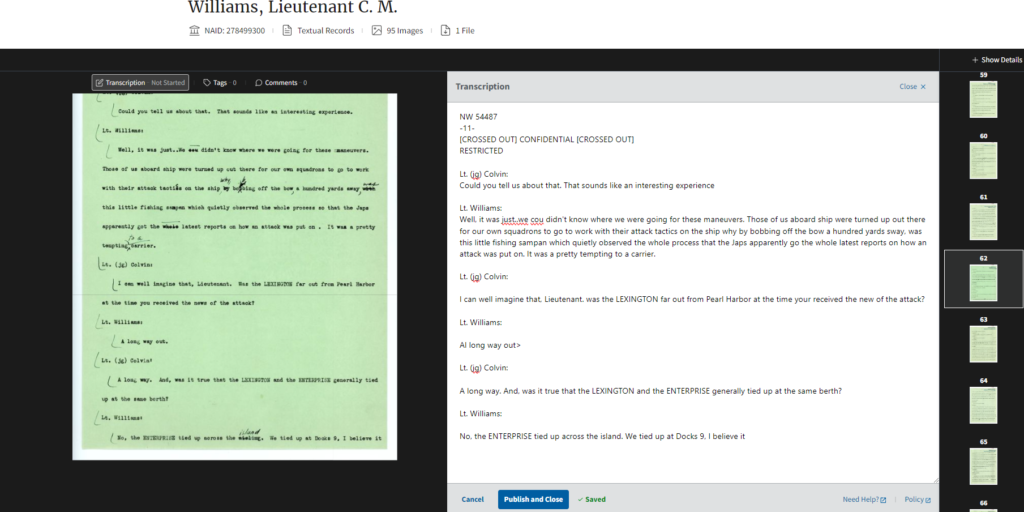
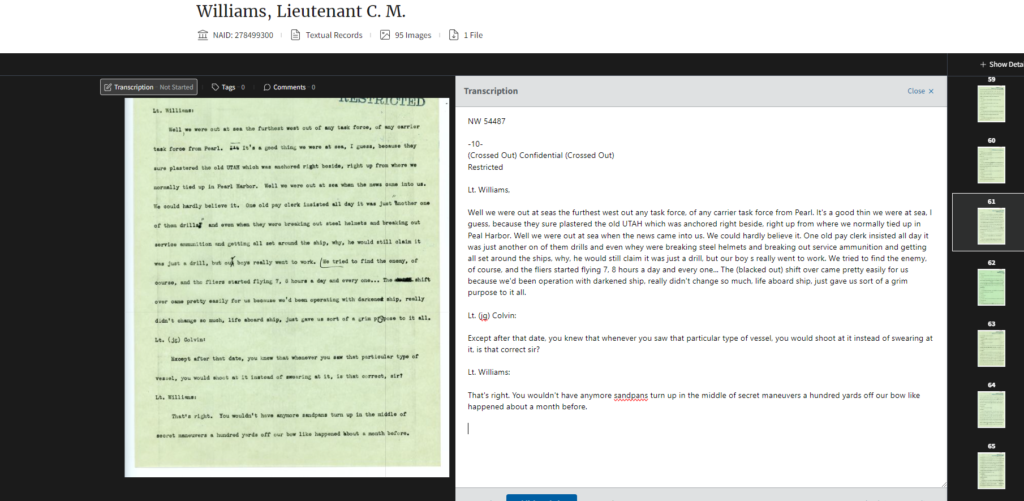

Leave a Reply
You must be logged in to post a comment.