One major challenge when using Exhibit.so system is the limitations that happen if there are fewer users. The system is easily overloaded, making it difficult for you to view or edit your exhibit. This problem creates an issue with having little to minimal accessibility. When trying to create an exhibit using Exhibit.so you have some of your content available but you are unable to view your work. Once you figure out how to create your iiif link, the rest of the work is relatively easy it gets much easier. When I first started using the Exhibit.so it was very user-friendly. I tried to log into the site several times, and I was unable to complete my assignment using this platform due to my iiif image not loading. Here is the original link created https://www.exhibit.so/exhibits/edit/5B5uiHTuqzmKTzN5NDoH. Another hurdle that I experienced was that I needed help retrieving the iiif code used for the image. This would have been very helpful to see any errors within the code. I wanted to confirm that my current code was correct and wanted to add another image. I would be aware of what was causing me to have an issue if I was able to examine the code that was uploaded.
I next tried to use QUIRE; it was easy to view and navigate. The setup was more as a collaborating tool. In my opinion, QUIRE was not the best tool to create an exhibit with community interaction. There were several ways to add tasks and also useful information such as cost, active tasks and a way to create groups. I see QUIRE as a great planning tool to track projects and set reminders to keep plans on schedule. I also like how I added pictures and created fields to go along with the image. When creating a program or adding an item to a digital curation, we can see how this can be useful for tracking data to add to reports at a later time.
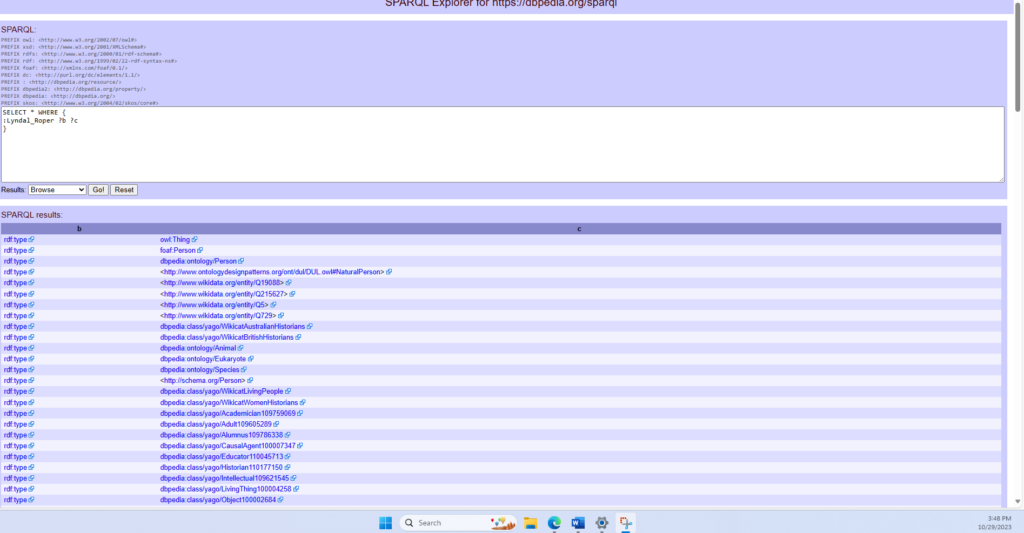
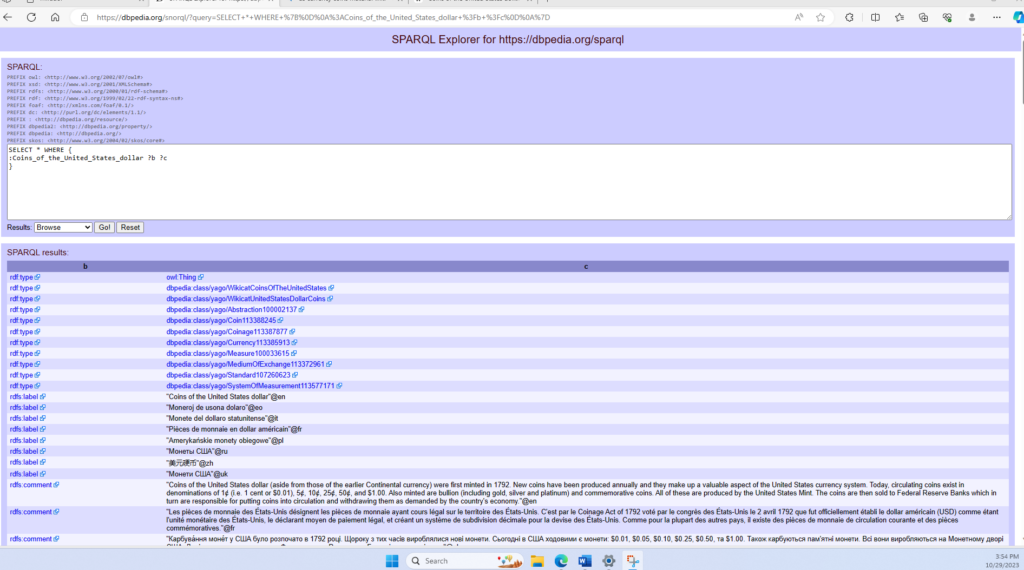
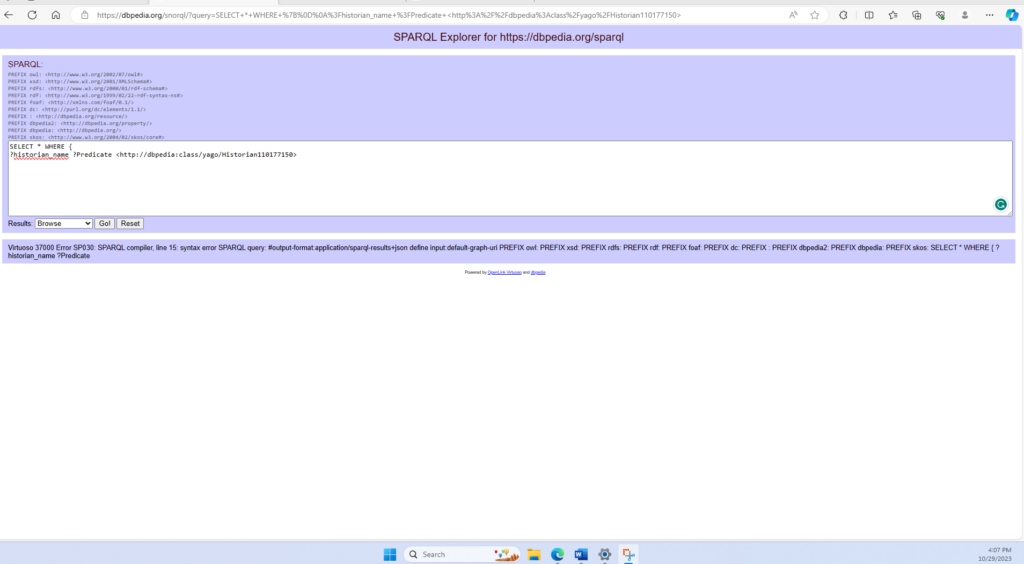
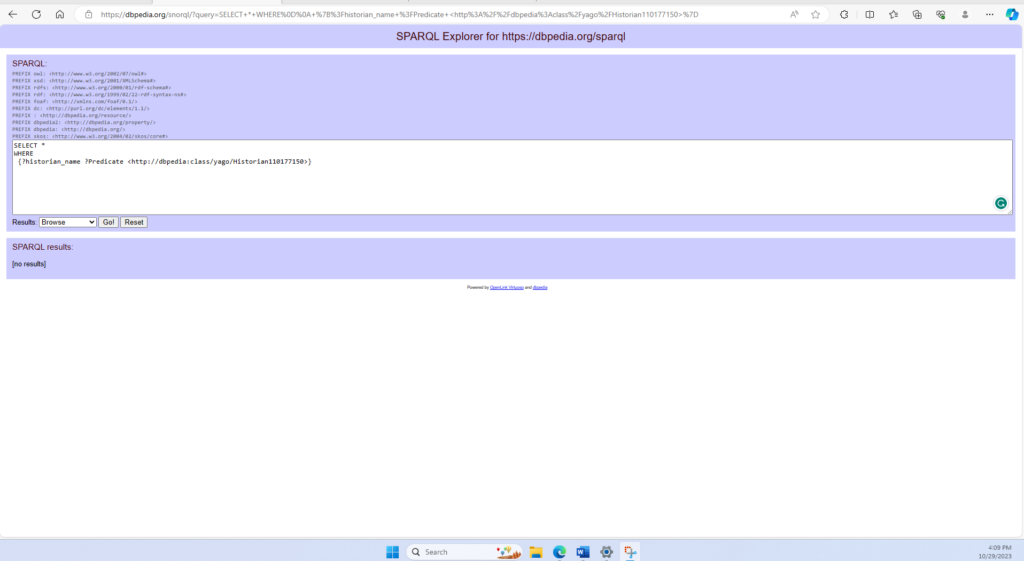
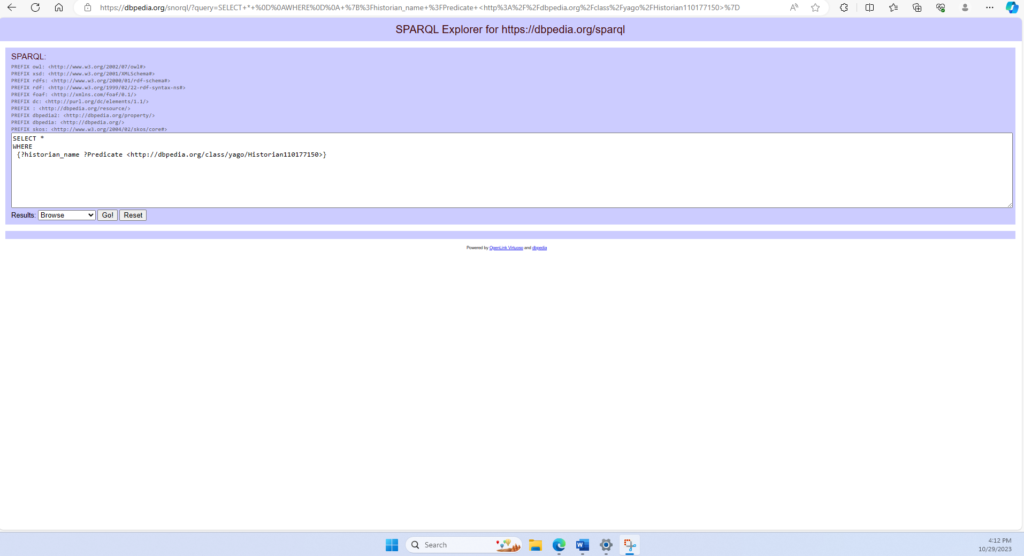
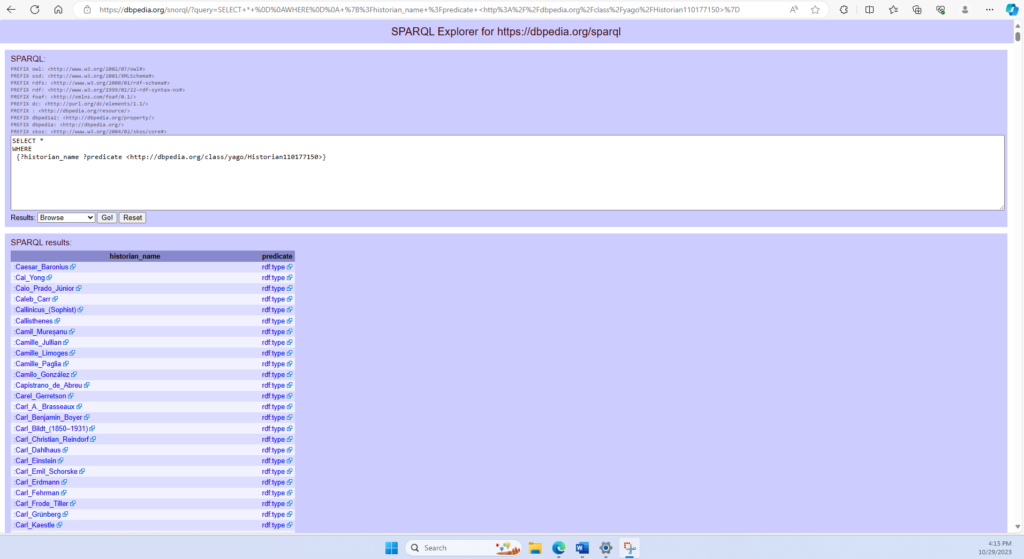
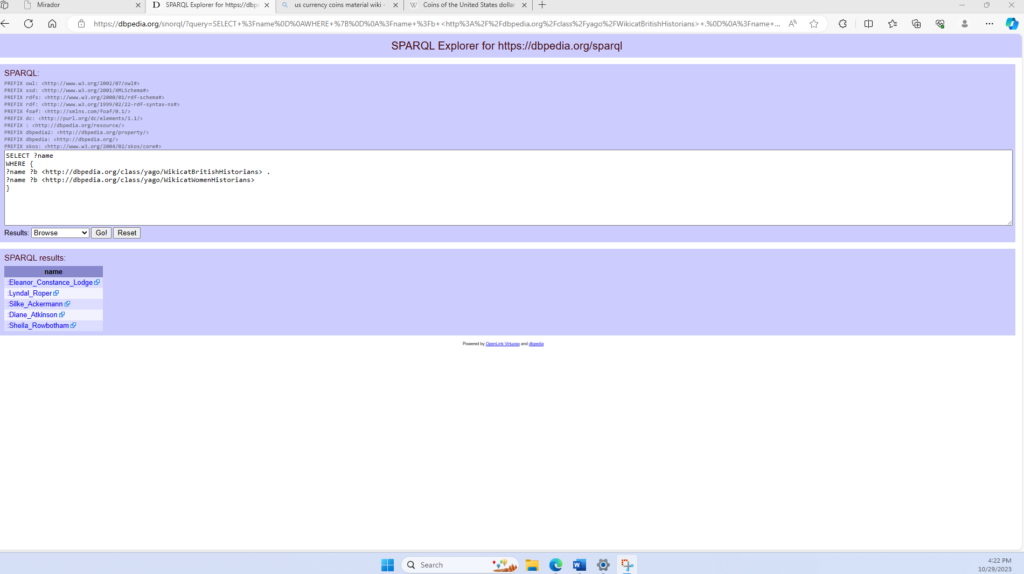
To complete this assignment, I used the instructions on programminghistorian.org to learn how to navigate SPARQL. The attached screenshots reflect the steps used while learning the database. There were a few nuances that I noticed about using SPARQL. Having limited access was one of the biggest drawbacks to using this type of system. My experience while using SPARQL was that you had to make sure you have everything in the correct order to get results. There are a few screenshots added that show I had no results or an error in results. Once I examined my code and noticed the difference, I was using a capital P in place of a lower p. Once the mistake was repaired, I was able to achieve the results that were in the sample. I was aware of a few changes with the order of data that was on my query as opposed to an example. This small change only poses a problem if ranking was a part of the order that was created.
Using these tools, myself I can see how using linked data can be very beneficial. The linked database provides users the ability to discover information by using semantic queries. Metadata and linked data provide the capability of connecting to other databases to give the user access to more information than they would get by providing access to just their sources. Linked data helps professionals create more content and provide access to new services and applications that schools and researchers can use. Giving the general public the option to explore an exhibit digitally will pique more interest and provide greater access to citizens who may be interested but don’t have the funds or possibly have mobility issues that may prevent them from seeing the exhibit in person. I believe librarians and museum professionals are open to exploring new opportunities that will allow access to a broader audience and to the capability to assist with cultural heritage and other community outreach by supplying data and more access.
A significant challenge is funding and the need for knowledge in using some of the systems. It is known that it is prevalent for museums and similar institutions to struggle with financial instability in an article that I read states that three-quarters of museums (76%) reported that their income retreated by an average of 40% in 2020 as their doors were closed for an average of 28 weeks, the survey showed. Altogether, 61% reported that their net operating performance declined by an average of 38%. Museums reported having an average of 16 months of operating reserves on hand, while one-quarter had four months or less remaining funds (Kenney, 2021). The financial aspect is major in training, resources, staff, and time management. With a balance of the following, it is easier to find staff that is willing to learn new technology and implement the necessary changes that it takes to keep up with the constant changing of technology to keep the data relevant and provide access.
In conclusion, there are many tools at our disposal with a minimum or no cost. There is the challenge of trying to convince directors and other staff of change and how it can benefit the general public and our current institutions. Each source has unique benefits and a way to make access and planning much more manageable. It will take time for some institutions to change or switch their general practices.

Leave a Reply
You must be logged in to post a comment.